
Last updated September 23, 2026
Free visual inspection and a written scope of work before any mitigation begins - photos, moisture readings, and drying logs go in your claim file
The scope we write is the scope we bill. Anything new gets shown to you, in writing, before we touch it.
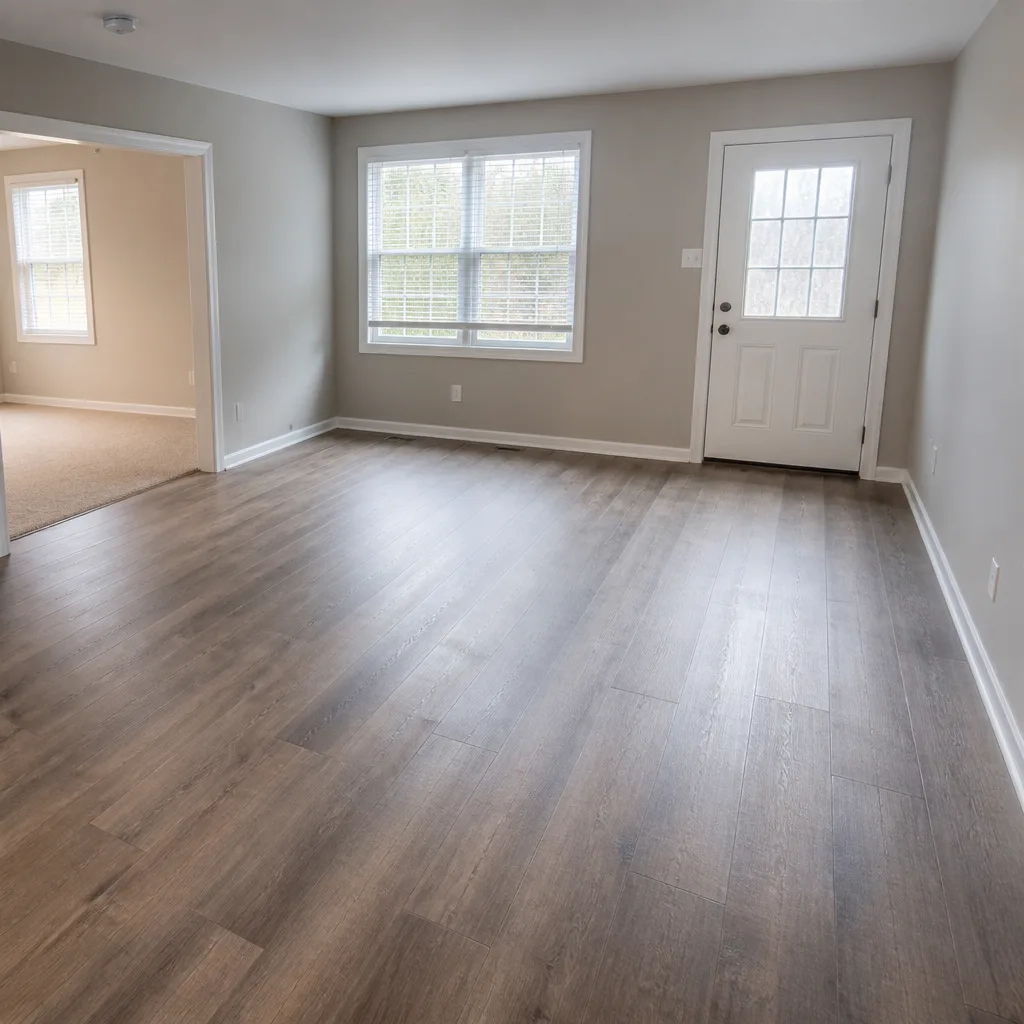
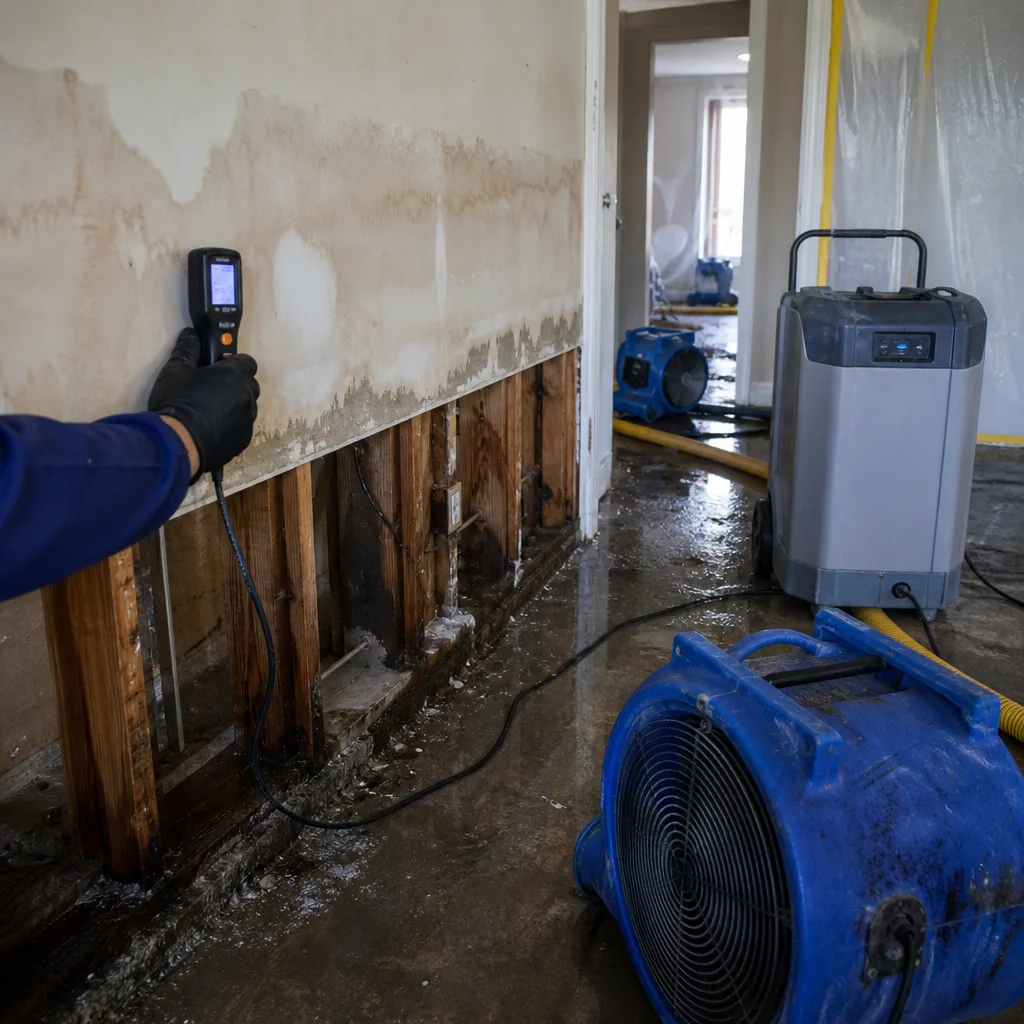 Before
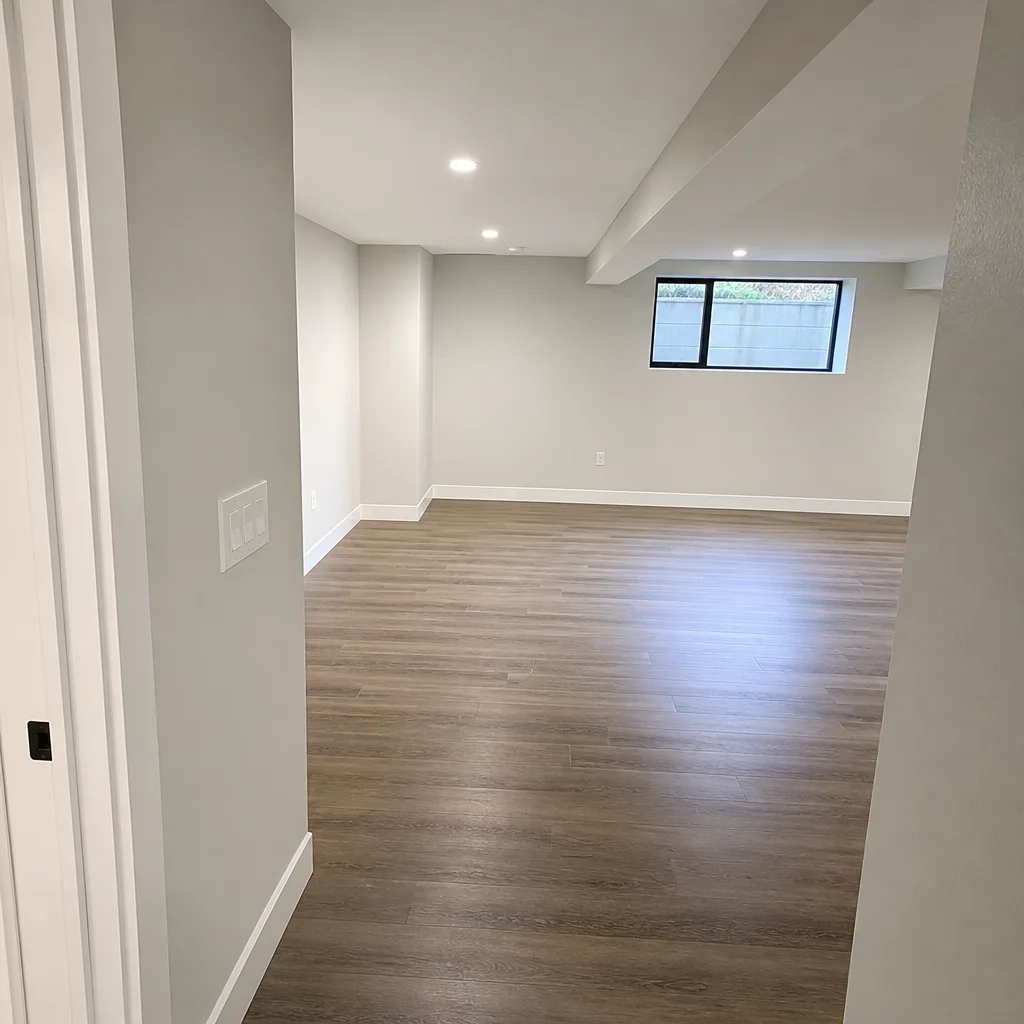 After
After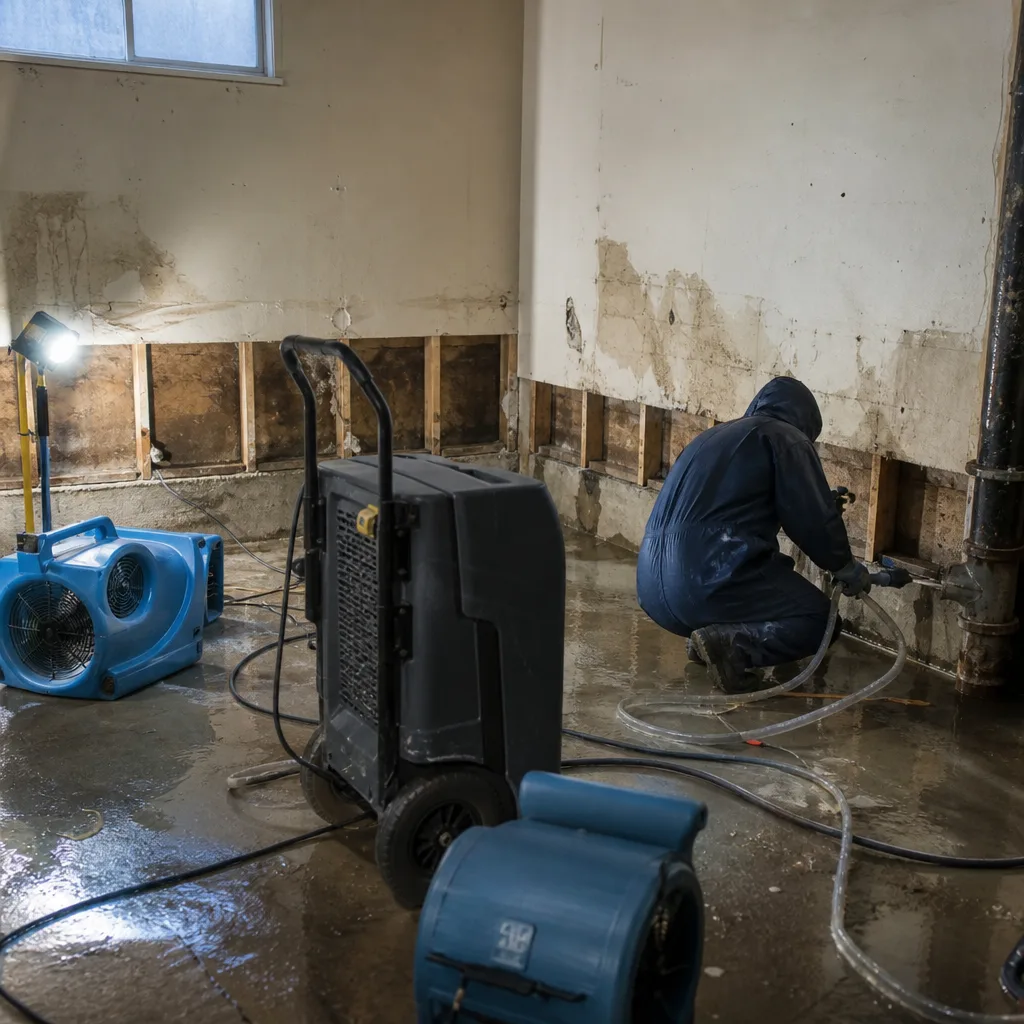 Before
 After
After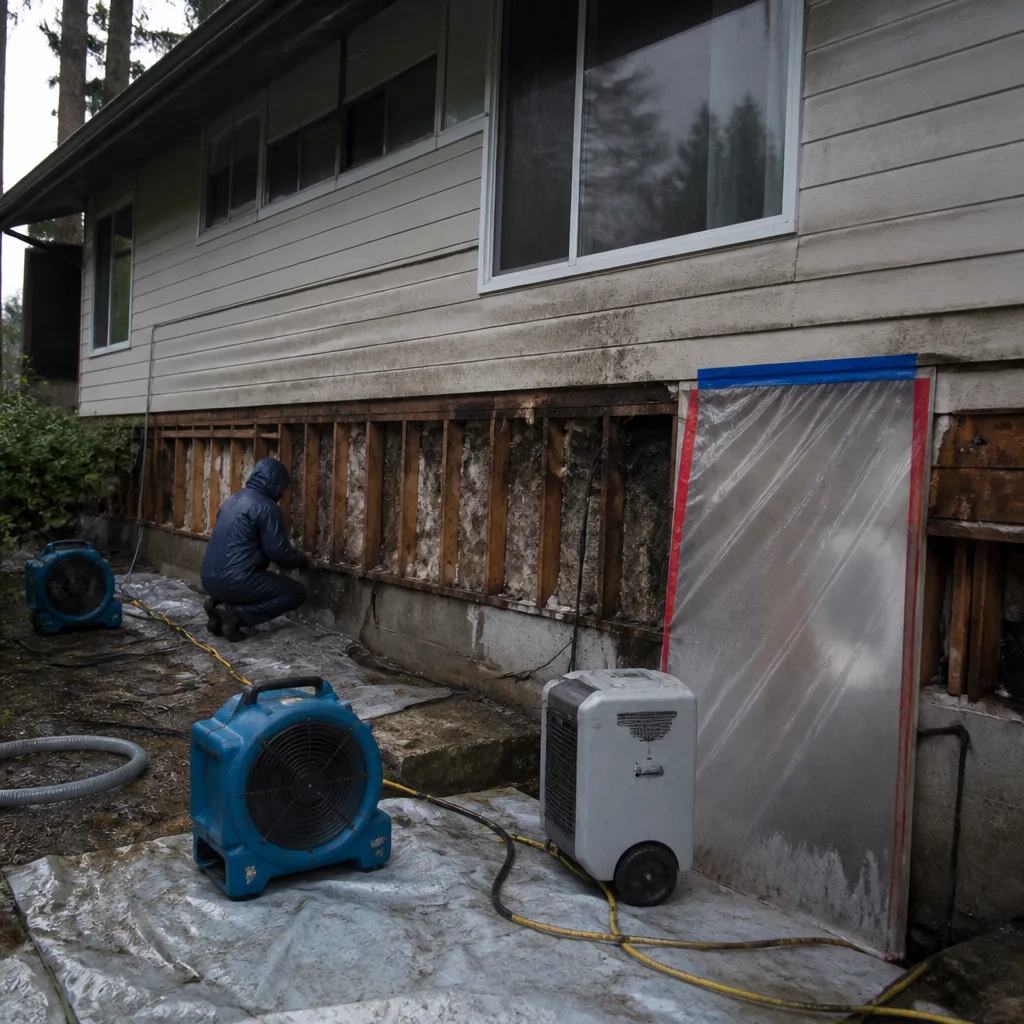 Before
 After
AfterDIY vs Professional Damage Restoration: The Bellevue Homeowner’s Decision Guide
A Bellevue homeowner who rents a consumer dehumidifier and dries visible surfaces after a pipe burst may believe they’ve mitigated damage. But if a professional moisture assessment later finds elevated readings in the wall cavity, the insurer’s position is that the homeowner’s incomplete mitigation caused the secondary loss. The claim for mold remediation, structural drying, and material replacement can be denied outright. This guide maps where DIY action satisfies your policy’s duty-to-mitigate clause, where it creates coverage gaps, and how to make a defensible decision based on loss size, material type, and documentation requirements specific to Washington homeowners insurance. For related guidance, see our step-by-step guide to hiring a damage restoration contractor in Bellevue.
Quick Answer
DIY damage restoration in Bellevue is legally and financially defensible for small, contained water losses on non-porous surfaces where you document every action with date-stamped photos and a written log. For losses exceeding roughly 50 square feet, involving porous materials like drywall or carpet, or requiring work inside wall cavities, professional restoration is necessary to satisfy your insurer’s duty-to-mitigate clause and avoid personal liability for secondary damage.
Table of Contents
- What ‘Reasonable Mitigation’ Means Under Your Washington Policy
- DIY Tasks That Match Professional Outcomes
- Tasks Where Professional Equipment Changes the Drying Curve
- How to Document DIY Mitigation for Adjuster Acceptance
- Bellevue’s Climate and Your Drying Window
- A Defensible Decision Framework: Loss Size, Material, Insurance
- Liability Exposure: What Happens When DIY Fails
- Cost Reality: When DIY Is More Expensive
BeforeAfterWhat ‘Reasonable Mitigation’ Means Under Your Washington Policy
Every standard Washington homeowner’s policy contains a duty-to-mitigate clause. It requires the policyholder to take “reasonable steps” to prevent further damage after a covered loss. What qualifies as reasonable is where DIY restoration lives or dies in the claims process.
Reasonable mitigation does not mean perfect restoration. It means timely, good-faith action that a prudent person would take under the circumstances. For insurers operating in King County, this standard is interpreted through case law and Department of Insurance guidance that emphasizes documentation over equipment type. A homeowner who acts quickly, keeps records, and calls professionals when the loss exceeds their capacity generally satisfies the clause. One who delays, lacks documentation, or attempts work clearly requiring specialized equipment does not.
The critical distinction: DIY mitigation that stops secondary damage satisfies the duty. DIY mitigation that merely conceals ongoing damage, leaving elevated moisture readings in hidden cavities, breaches it. The insurer’s argument will be that the homeowner’s incomplete work caused the subsequent mold or structural damage, converting a covered water loss into an excluded maintenance issue.
Specific actions Washington insurers recognize as reasonable DIY mitigation include:
- Removing standing water with wet/dry vacuums or mops within 24 hours of discovery
- Relocating unaffected contents to prevent exposure
- Installing emergency tarps over roof damage to prevent additional water intrusion
- Running household fans and dehumidifiers to accelerate surface drying
- Removing and discarding clearly saturated, low-value materials like cardboard or inexpensive rugs
Actions that typically fail the reasonable mitigation standard include:
- Attempting to dry wall cavities or subflooring without moisture detection equipment
- Leaving wet carpet pad in place, assuming the carpet surface will dry adequately
- Failing to inspect adjacent rooms or levels for migration
- Delaying professional assessment beyond 48 hours for Category 2 or 3 water losses
The documentation standard is unforgiving. An adjuster reviewing a claim six months later has no way to verify that you ran fans for three days unless you have timestamped photos and a written log. Your testimony that you “did everything right” carries minimal weight against a moisture reading of 18% wood moisture content in the sill plate, which is what a professional assessment will produce if DIY drying was incomplete.
We have reviewed claims where Bellevue homeowners lost $40,000 in mold remediation coverage because they could not produce contemporaneous documentation of their DIY mitigation efforts. The water loss was covered. The secondary mold damage, attributed to inadequate mitigation, was not.
DIY Tasks That Match Professional Outcomes
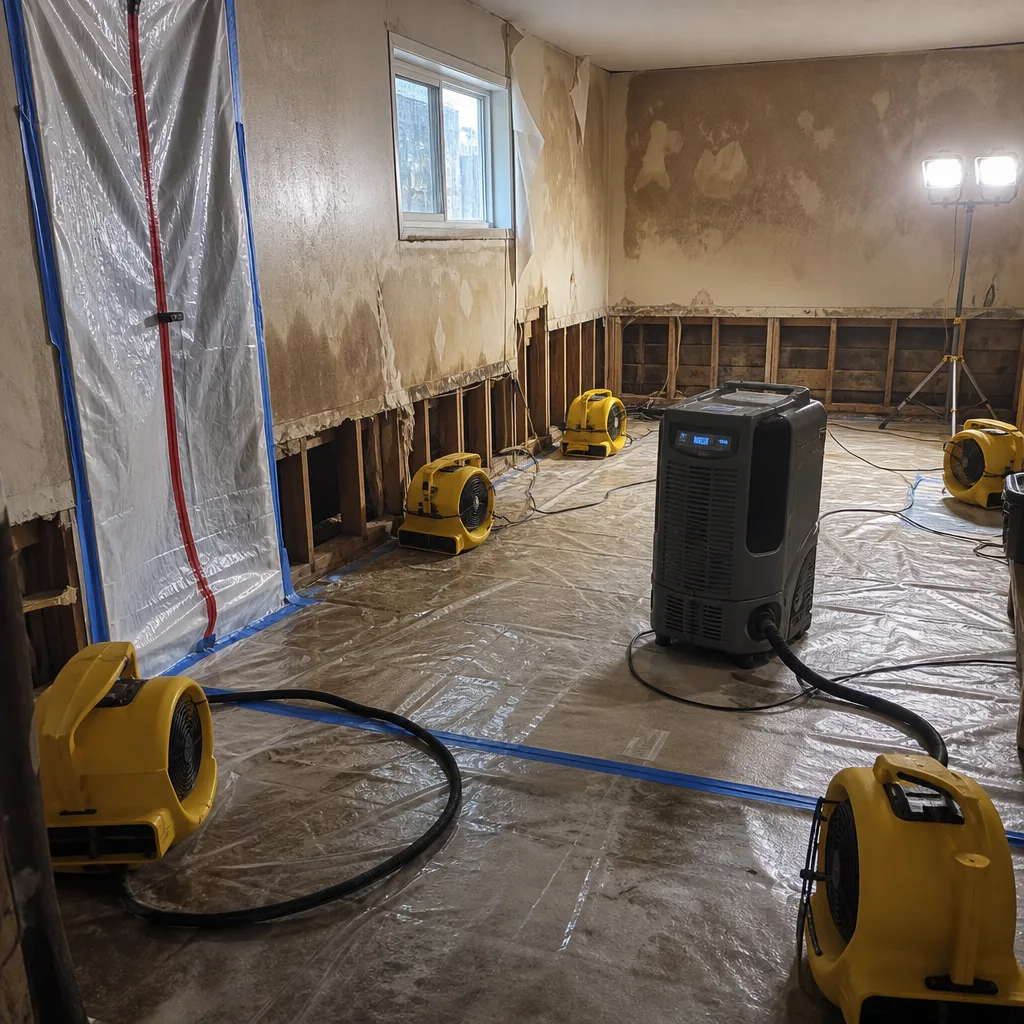
Certain restoration tasks produce outcomes that are functionally identical whether performed by a homeowner or a certified technician. The equipment is simple, the physics are straightforward, and the documentation requirements are minimal. These are the areas where DIY makes economic sense and satisfies insurer expectations.
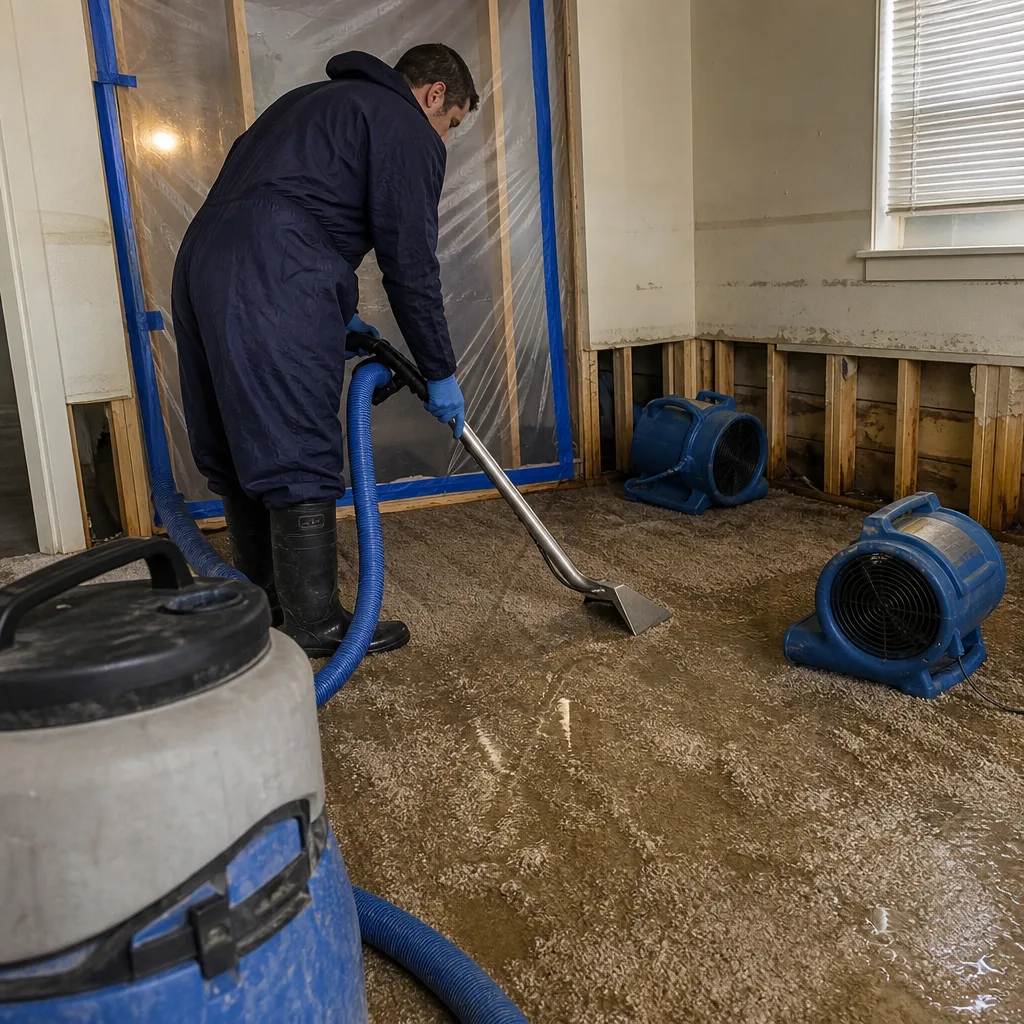
Surface water extraction from hard flooring. A wet/dry vacuum with adequate capacity, used promptly on tile, sealed concrete, or vinyl plank, removes standing water as effectively as a professional extractor for losses under roughly 100 square feet. The key variable is speed, not equipment sophistication. Water that sits for more than a few hours begins wicking into baseboards and subflooring, at which point professional extraction with weighted vacuum heads becomes necessary to draw water from grout lines and expansion joints.
Contents relocation and protection. Moving furniture, electronics, and valuables to unaffected areas requires judgment about what to move and where, but not specialized training. Document the condition of items before moving them with photos, and note any pre-existing damage. This documentation protects both your claim and your belongings.
Emergency tarping of roof damage. For small, accessible areas, a homeowner with appropriate safety equipment can install a tarp that prevents additional water intrusion as effectively as a temporary professional installation. The standard is that the tarp prevents further damage until permanent repairs can be made, not that it is aesthetically perfect. Document the date, time, and weather conditions when the tarp was installed.
Removal of clearly unsalvageable materials. Cardboard boxes, inexpensive textiles, and other low-value items that are clearly saturated can be discarded without professional assessment. The savings come from reducing the volume of material that professionals must handle and inventory. Photograph items before discarding them, as insurers may request proof that removal was necessary rather than convenient.
Initial isolation of affected areas. Closing doors, sealing HVAC vents with plastic sheeting, and creating negative pressure with a household fan pointed out a window can limit cross-contamination in the immediate aftermath of a loss. This is particularly relevant for smoke and odor migration after minor fires, where rapid containment prevents the need for whole-house deodorization.
The common thread: these tasks address visible, accessible conditions where the success criterion is obvious and the failure mode is not hidden. When the work is done, you can see that it is done. This is where DIY restoration is defensible.
Tasks Where Professional Equipment Changes the Drying Curve
Professional restoration diverges from DIY capability not at the level of effort but at the level of measurement and control. The equipment deployed by firms like Water Damage Restoration in Bellevue produces drying curves, documented in daily logs, that consumer equipment cannot replicate. These logs are what convert restoration invoices into payable insurance claims.
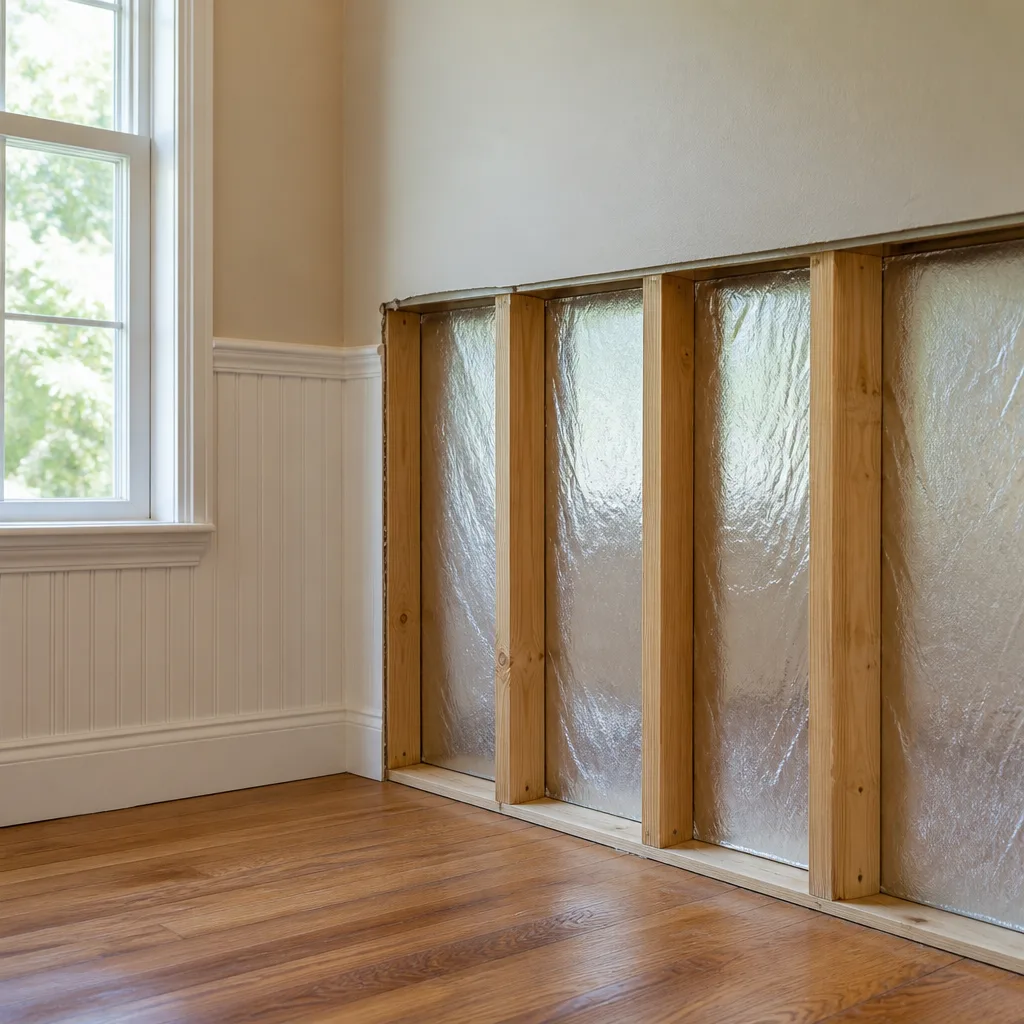
Wall cavity and structural drying. Injectidry systems and similar technologies create controlled airflow inside wall cavities, forcing dry air through spaces that are inaccessible to surface drying. Without this, moisture remains in stud bays and insulation for weeks, producing the conditions for mold growth that appears months later. A consumer dehumidifier cannot generate the air changes per hour or the specific humidity reduction necessary to dry these spaces.
Psychrometric monitoring and adjustment. Professional drying is governed by psychrometric data: the relationship between air temperature, relative humidity, and vapor pressure. Technicians use this data to calculate the specific humidity of the air entering and leaving the drying chamber, adjusting equipment placement and settings daily. The goal is not merely “dry” but “dry to a documented standard,” typically 12-16% wood moisture content or equilibrium with the surrounding environment. Consumer humidity meters lack the precision for this calibration.
Category 2 and 3 water losses. Gray water (dishwasher discharge, washing machine overflow) and black water (sewage, flooding) require antimicrobial treatment, controlled demolition with proper containment, and disposal protocols that are regulated under Washington State Department of Health guidelines. DIY handling of these losses creates health hazards and virtually guarantees claim denial for any secondary damage.
Fire and smoke damage restoration. Smoke residue is chemically complex, with acid compounds that continue damaging surfaces after visible soot is removed. Professional restoration uses thermal fogging, ozone treatment, and hydroxyl generation to neutralize odor compounds at the molecular level. Surface cleaning with household products often drives residues deeper into porous materials, making professional deodorization more difficult and expensive when eventually required.
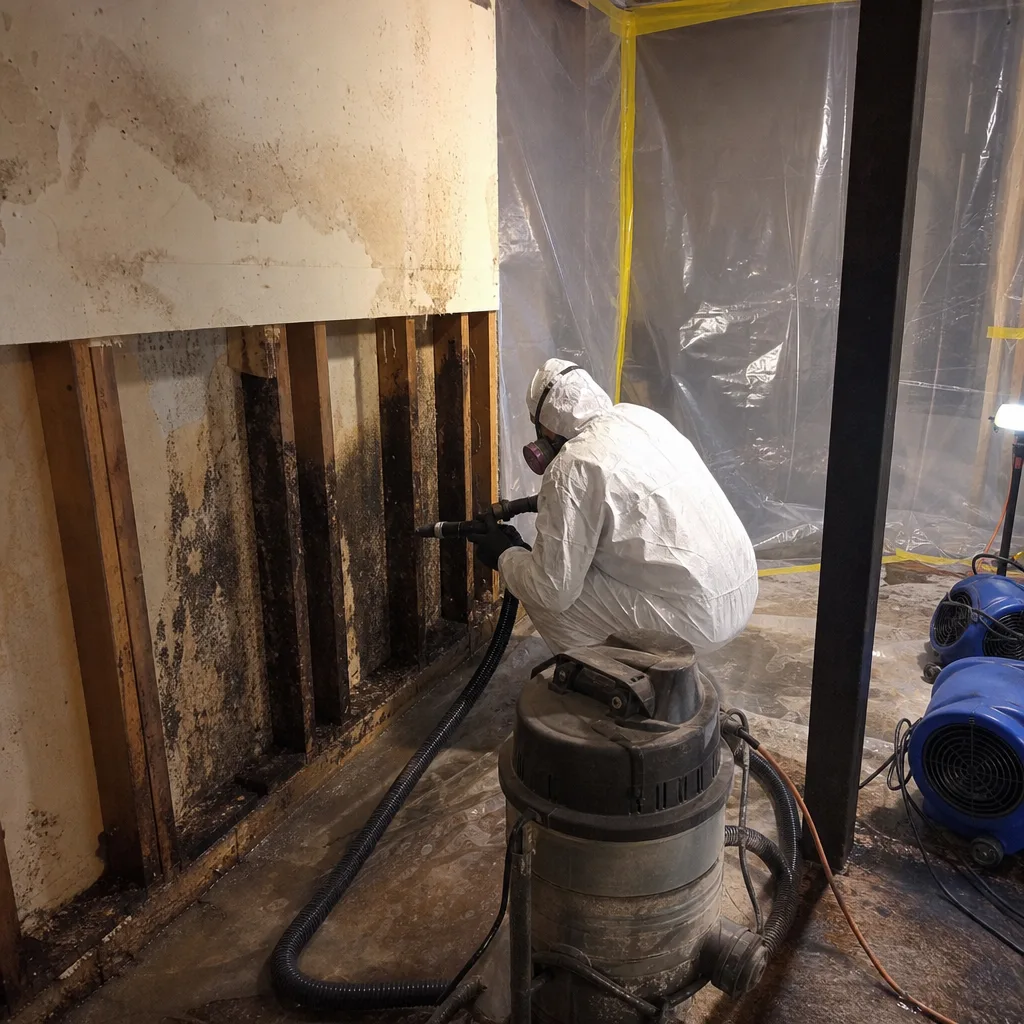
Mold remediation beyond 10 square feet. Washington State does not require licensure for mold remediation, but EPA guidelines and industry standards (IICRC S520) establish containment, negative air pressure, and personal protective equipment requirements for areas exceeding 10 contiguous square feet. DIY remediation of larger areas risks cross-contamination, personal exposure, and claim complications if mold returns.
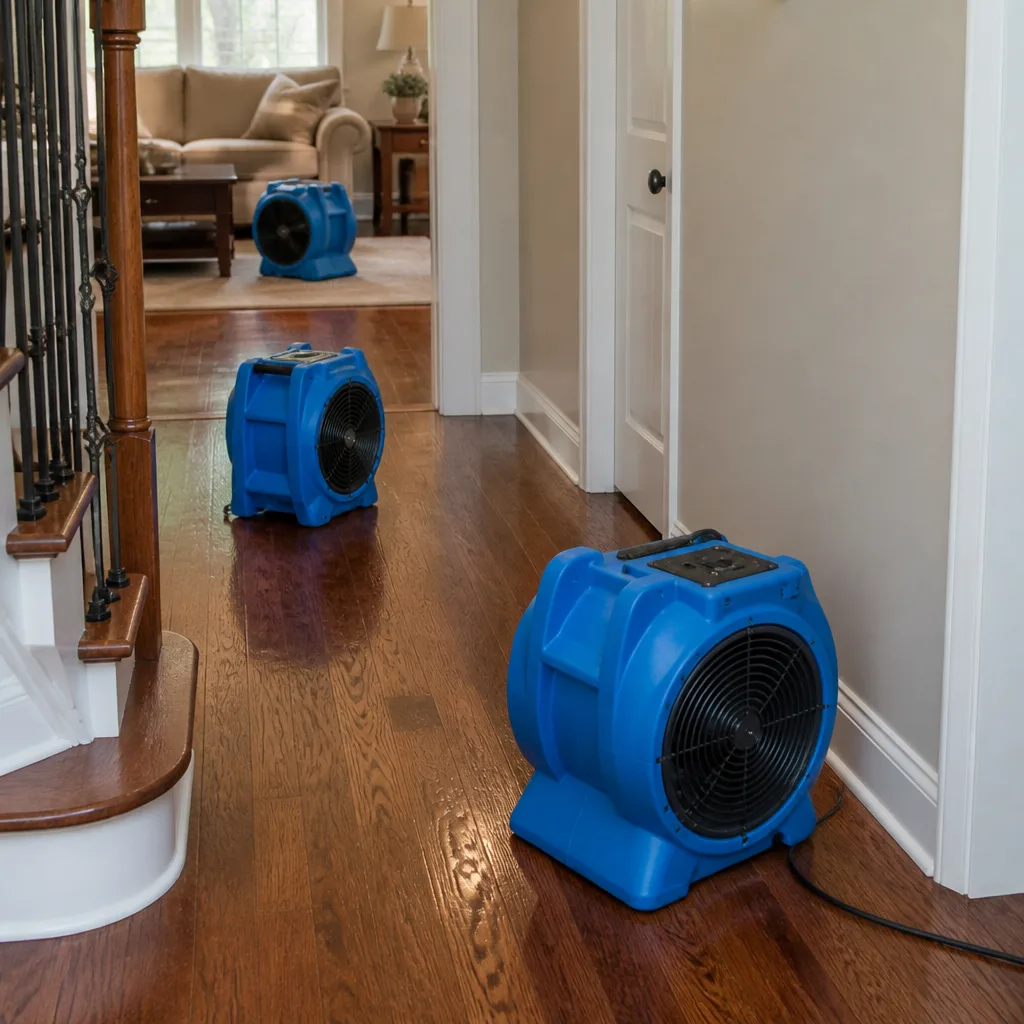
The equipment distinction matters for documentation. When DryMark Restoration Bellevue deploys B-Air axial air movers and Phoenix dehumidifiers, the serial numbers, placement diagrams, and daily psychrometric readings become part of the job file. An adjuster can verify that professional-grade drying occurred. A homeowner running a box fan cannot produce equivalent documentation, and the absence of that documentation becomes the basis for denying secondary damage claims.
How to Document DIY Mitigation for Adjuster Acceptance
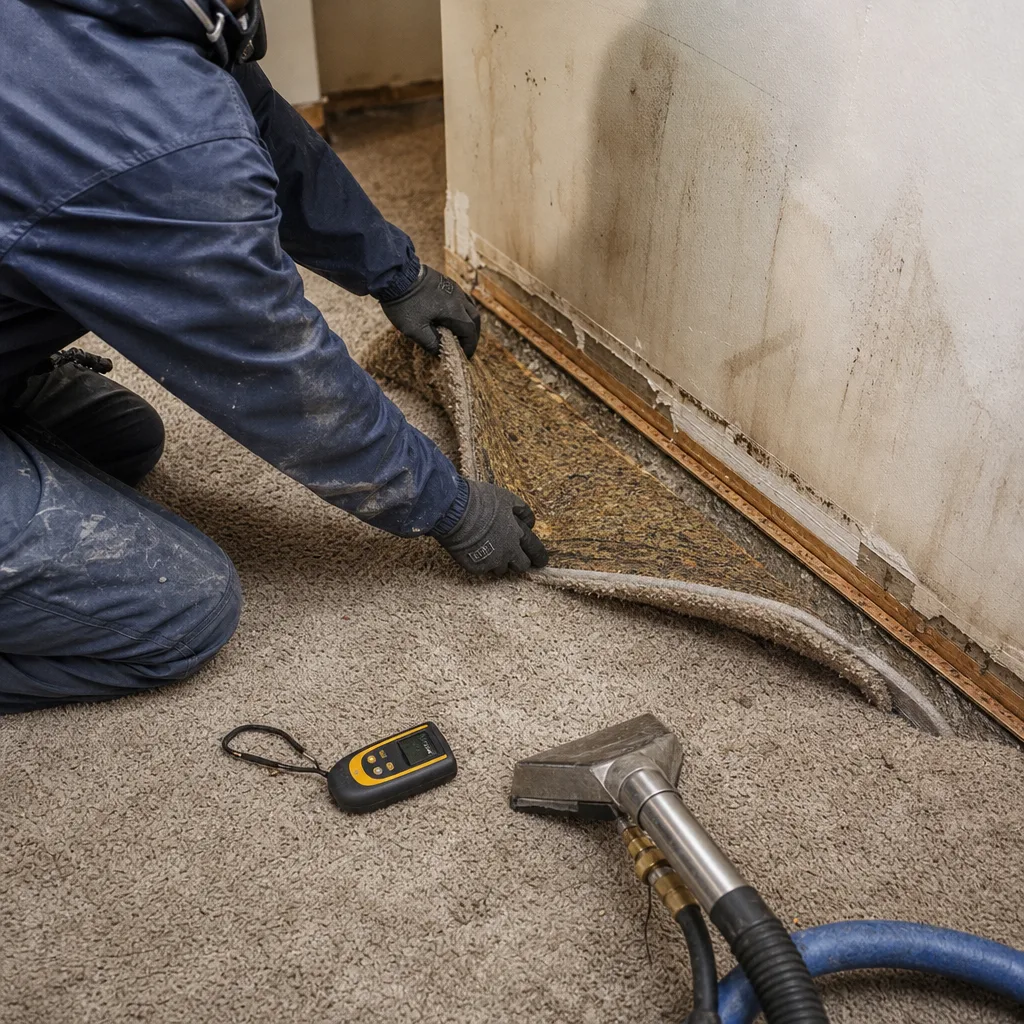
If you choose DIY mitigation for a qualifying loss, your documentation must meet the same standard that professional restoration firms apply: contemporaneous, detailed, and verifiable. An adjuster reviewing your file months later should be able to reconstruct exactly what you did, when you did it, and why you believed it was sufficient.
Follow this documentation protocol:
- Photograph everything before touching it. Take wide shots of each affected room, close-ups of damage, and photos of water lines or residue patterns. Include timestamps by enabling location and time services on your camera or phone.
- Create a written log with 15-minute precision for the first 4 hours. Note when you discovered the loss, when water was shut off, when extraction began, and when each piece of equipment was placed. The first hours matter most for insurer evaluation of whether mitigation was prompt.
- Record equipment specifications and settings. If you rent a dehumidifier, note the model, capacity in pints per day, and the square footage it is rated to serve. If you use fans, note their CFM (cubic feet per minute) if available, or model numbers that can be referenced.
- Take daily photos of the drying progress. Same angles as your initial photos, showing visible changes. These demonstrate ongoing attention and provide a basis for claiming that drying was proceeding normally.
- Log any professional consultations. If you call a plumber, electrician, or any other professional, note their name, company, arrival time, and findings. Their assessment becomes part of your mitigation record.
- Document why professional restoration was not immediately engaged. This is critical. Your log should state the basis for your decision: the loss was contained to X square feet, involved only hard surfaces, and appeared fully addressed by your actions. This demonstrates good-faith judgment rather than cost avoidance.
- Retain all receipts. Equipment rentals, materials purchased, even the cost of fans you bought rather than rented. These substantiate your claim that mitigation expenses were incurred.
The format matters less than the contemporaneity. A handwritten notebook with dated entries is acceptable if the entries are clearly made at the time of events, not reconstructed later. Digital logs with automatic timestamps are stronger. Photos with EXIF data showing date, time, and GPS location are strongest.
What this documentation cannot do is substitute for professional moisture verification. If your insurer or a subsequent buyer’s inspector finds elevated moisture in concealed spaces, the documentation shows you acted in good faith but does not prove the structure was dry. This is the irreducible risk of DIY mitigation: you can document your actions perfectly and still face liability for hidden moisture.
Bellevue’s Climate and Your Drying Window
Bellevue’s maritime climate creates conditions that narrow the window for effective DIY drying compared to drier inland markets, making seasonal damage restoration care essential for local homeowners. Understanding these conditions is essential to making a defensible decision about whether to attempt DIY mitigation.
Average annual relative humidity in Bellevue ranges from 60% to 80%, with winter months frequently exceeding 75% RH and summer months rarely dropping below 55% RH even during dry spells. For context, the threshold at which mold growth becomes likely on organic materials is approximately 60% RH sustained over 48-72 hours. This means Bellevue’s ambient air is often close to or above this threshold without any water loss event.
The practical consequence: a consumer dehumidifier rated for 30 pints per day in 80°F, 60% RH conditions may achieve only 15-20 pints per day in Bellevue’s cooler, more humid environment. The unit runs continuously without reaching the target humidity reduction, and the compressor cycles inefficiently as it struggles against incoming moisture from ventilation and infiltration.
Professional-grade equipment from Phoenix and Dri-Eaz is specified for performance at lower temperatures and higher humidities. A Phoenix 200 HT, for example, maintains extraction efficiency at 50°F and 80% RH, conditions where consumer units lose 40-60% of their rated capacity. This is not a marginal difference; it is the difference between achieving a drying target in 72 hours versus never achieving it without supplemental heat and air exchange.
Bellevue’s specific geography compounds this effect. Homes near Lake Washington or the Lake Sammamish corridor experience higher humidity from water body influence. Homes in the Bridle Trails or Somerset areas, with mature tree cover and reduced solar exposure, have less passive drying from sunlight and air movement. Homes built before 1990, common in the Newport Hills and Factoria neighborhoods, often lack the vapor barriers and continuous insulation that would slow moisture migration into wall cavities.
The seasonal variation matters for decision-making. A January pipe burst in Bellevue, when outdoor temperatures are 40°F and indoor humidity is sustained by heating systems that do not dehumidify, presents a fundamentally different drying challenge than a July washing machine overflow when windows can be opened for cross-ventilation. The January loss almost always requires professional dehumidification; the July loss may be DIY-manageable if it is small, contained, and on hard surfaces.
Your decision calculus should include a humidity reading from a reliable hygrometer. If indoor RH is above 55% before you start drying, and your loss involves any porous material, the physics are against DIY success. This is not opinion; it is the psychrometric relationship between vapor pressure differential and drying rate.
A Defensible Decision Framework: Loss Size, Material, Insurance
Use this framework-and our water damage restoration maintenance checklist for Bellevue homeowners-to make a decision that you can defend to your insurer, your mortgage holder, and a future buyer of your home. It replaces gut feeling with categorized criteria.
| Category | DIY Appropriate | Professional Required |
|---|---|---|
| Loss size | Under 50 square feet, single room, no migration to adjacent spaces | Over 50 square feet, multiple rooms, or suspected migration to wall cavities, subflooring, or lower levels |
| Water category | Category 1 (clean water from supply line), recent origin, no contamination | Category 2 (gray water) or Category 3 (black water) of any size; any Category 1 loss undiscovered for more than 48 hours |
| Material type | Hard, non-porous surfaces: tile, sealed concrete, vinyl plank, solid wood with surface moisture only | Porous or semi-porous materials: carpet and pad, drywall, plaster, engineered wood, insulation, or any material with suspected wicking into substrate |
| Insurance involvement | No insurance claim anticipated; or claim below deductible with no concern about future coverage | Any claim where secondary damage coverage is material; any loss that may affect future insurability or resale disclosure |
| Documentation capacity | Homeowner can maintain detailed log, daily photos, and equipment specifications for minimum 72 hours | Homeowner cannot commit to documentation protocol; or loss requires professional-grade documentation for claim acceptance |
| Time availability | Homeowner can monitor drying continuously for 72 hours, adjust equipment, and recognize signs of inadequate progress | Homeowner is traveling, working, or otherwise unable to provide continuous attention during critical drying period |
The intersection of these categories produces clear guidance. A 20-square-foot Category 1 loss on tile flooring in a single room, with no insurance claim, documented by a homeowner who is present and attentive: DIY is defensible. A 75-square-foot Category 2 loss on carpet and pad, with an insurance claim pending, in a home where the owner works outside Bellevue during the day: professional restoration is necessary.
The gray zone, losses that meet some DIY criteria and violate others, should default to professional assessment. DryMark Restoration Bellevue offers free estimates precisely for these decisions. The cost of an assessment is zero; the cost of an incorrect DIY decision can be tens of thousands in uncovered secondary damage. Explore more guides & resources to protect your home and your claim.
Liability Exposure: What Happens When DIY Fails
The risk of incomplete DIY mitigation extends beyond insurance claim denial to personal liability that persists for years after the loss.
Future mold claims. If mold appears six months after a water loss, and your insurer determines that the mold resulted from inadequate mitigation, you bear the full cost of remediation. In Washington, mold remediation for a single affected wall cavity can exceed $8,000. Whole-house remediation involving HVAC contamination can reach $30,000 or more. These costs are not recoverable from your insurer if the duty-to-mitigate clause was breached.
Resale disclosure obligations. Washington law requires sellers to disclose material defects, including past water damage and mold. A documented professional restoration with moisture logs and clearance testing provides a clean disclosure. DIY mitigation with no professional verification leaves you disclosing an unverified condition that may trigger buyer inspection demands, price reductions, or transaction delays.
Mortgage holder notification requirements. Many mortgage agreements require notification of losses affecting the collateral property. Failure to notify, or notification that reveals incomplete mitigation, can trigger default provisions or forced-placed insurance requirements.
Health liability to occupants. If mold or bacterial growth from incomplete mitigation causes health effects to tenants, family members, or subsequent occupants, you may face liability that homeowners insurance does not cover. This is particularly relevant for rental properties, where landlord duties to provide habitable premises are strict.
The documentation that professional restoration provides, including the daily moisture logs and photo records that are standard under IICRC and RIA protocols, is not merely for insurer convenience. It is a liability shield that demonstrates due diligence was performed by qualified parties using measured, verifiable methods.
Cost Reality: When DIY Is More Expensive
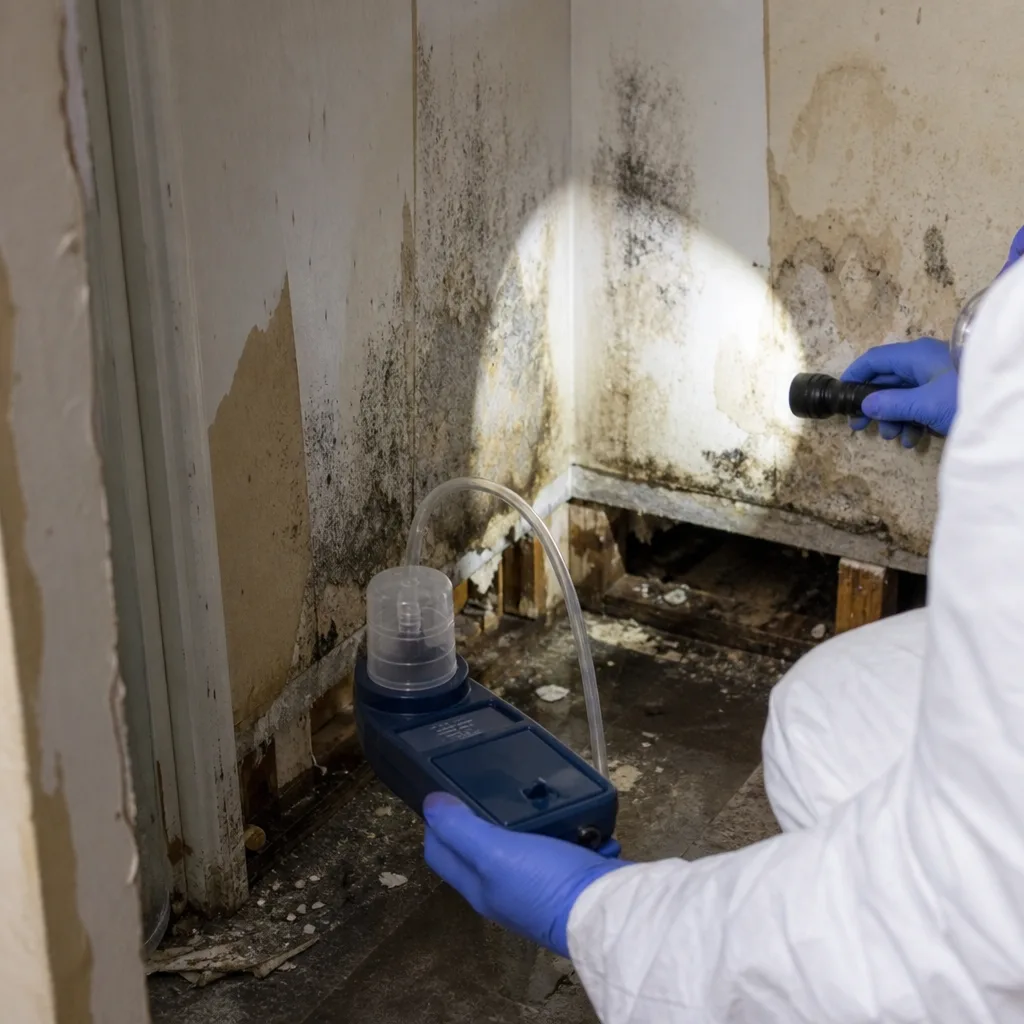
The apparent savings of DIY mitigation frequently disappear on closer examination. This is particularly true in Bellevue’s market, where equipment rental costs are high and the consequences of incomplete drying are severe.
A typical DIY mitigation for a small water loss might involve: renting a commercial dehumidifier ($80-120/day for 3-5 days), renting air movers ($25-40/day each, typically 3-4 units), purchasing a moisture meter ($50-200), and dedicating personal time to monitoring and documentation. Total out-of-pocket cost: $600-1,200, plus 15-20 hours of labor.
Professional mitigation for the same loss, scoped and documented, typically ranges from $1,200-2,500 in Bellevue’s market. The difference is $600-1,300 for professional moisture verification, documentation that satisfies insurer requirements, and transfer of liability for secondary damage.
Where DIY becomes more expensive is when it fails. The cost to remediate mold in a wall cavity that was not properly dried, including containment, removal, treatment, and reconstruction, typically starts at $4,000 and escalates rapidly with the extent of hidden damage. This cost is borne entirely by the homeowner when insurance denies coverage due to inadequate mitigation.
For fire and smoke damage, the cost comparison is more stark. DIY surface cleaning of visible soot may cost $200-400 in supplies and equipment. If the cleaning drives residues deeper into porous materials, subsequent professional deodorization becomes more complex and expensive, often adding 30-50% to the cost of restoration had professionals been engaged initially. Fire & Smoke Damage Restoration in Bellevue addresses these complexities with documented protocols from the outset.
The financial analysis should include the value of your time at a realistic rate, the risk-adjusted cost of potential secondary damage, and the insurance implications of documentation quality. For most homeowners in Bellevue’s price bracket, professional restoration is the lower-cost option when all factors are included.
Common Mistakes to Avoid
- Assuming visible dryness means complete dryness. Surfaces can feel dry to the touch while substrate moisture remains at levels that support mold growth. Only moisture meters or professional assessment can verify complete drying.
- Renting inadequate dehumidification for Bellevue’s humidity. A unit rated for “up to 1,500 square feet” in Arizona conditions may serve 400 square feet effectively in Bellevue’s maritime climate. Rental staff rarely adjust recommendations for local conditions.
- Failing to inspect adjacent rooms and levels. Water migrates along gravity paths and through wall cavities. The room below the visible loss, or the wall shared with an unaffected room, often contains hidden moisture that DIY efforts miss.
- Discarding damaged materials before insurer inspection. Your policy requires that the insurer have opportunity to inspect damaged property. Premature disposal, even of clearly unsalvageable items, can complicate claim valuation.
- Using household bleach on mold. Bleach does not penetrate porous materials to kill mold roots and can add moisture that worsens growth. It also produces chemical reactions with certain building materials that create additional hazards.
- Neglecting to document the “why not professional” decision. If you later need to defend your DIY choice, your contemporaneous reasoning matters. Log the factors that led to your decision while they are fresh.
When to Call a Professional
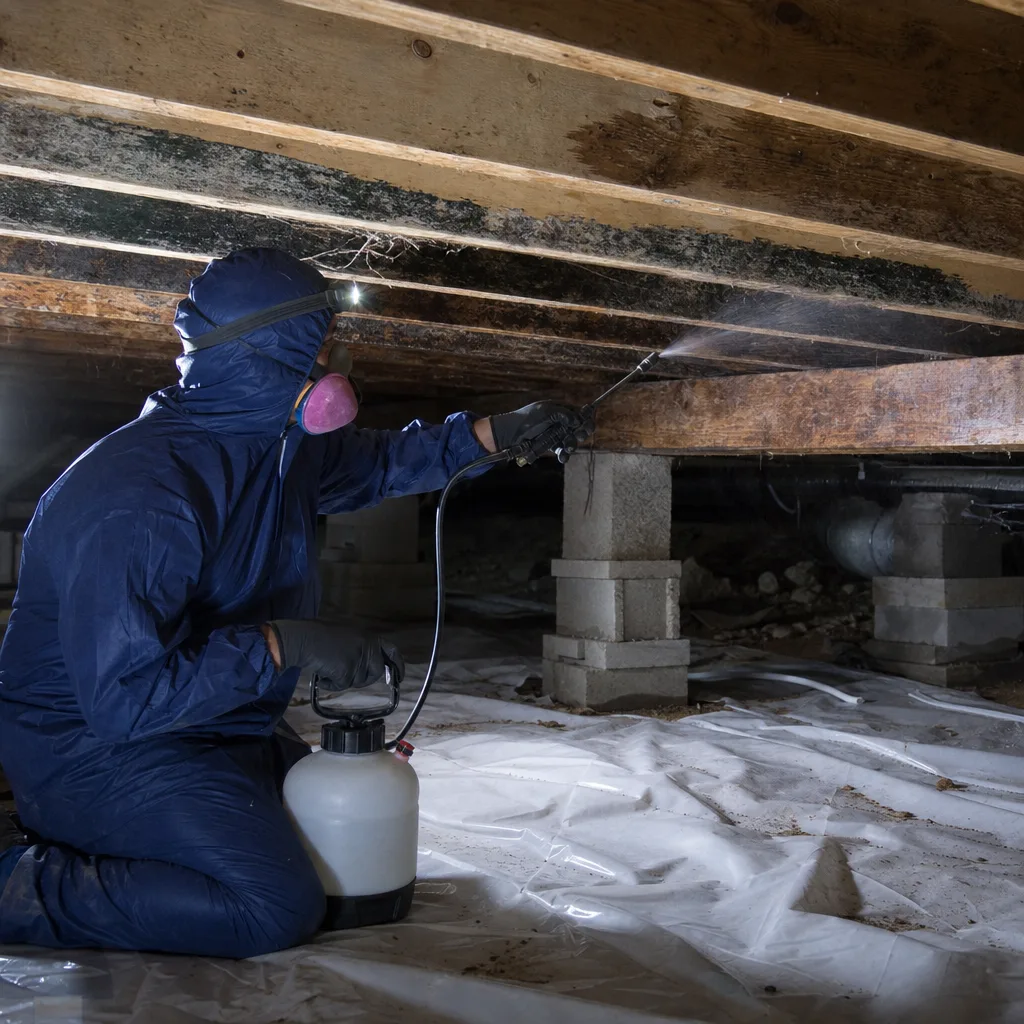
Call a professional restoration company when your loss exceeds any single “DIY appropriate” criterion in the decision framework above, when your insurance claim depends on documented mitigation, when you cannot commit to continuous monitoring for 72 hours, or when you simply need verification that your DIY efforts were sufficient.
DryMark Restoration Bellevue offers free estimates in Bellevue. Our assessments include moisture readings, a written scope of recommended work, and a written price before any work begins, consistent with Haven Standard, Clause 1. If you have a competitor’s estimate, we provide a free second opinion review at no charge. Call (425) 696-6320 to schedule an assessment or discuss whether your situation warrants professional intervention.
For Mold Remediation in Bellevue specifically, professional assessment is advisable for any visible growth exceeding 10 square feet, or any musty odor with no visible source, as these conditions indicate hidden colonization that DIY methods cannot address safely or effectively.
Frequently Asked Questions
Your insurance will cover the initial water loss if it is a covered peril, but may deny secondary damage if your DIY mitigation is deemed inadequate under the duty-to-mitigate clause. The key is documentation: contemporaneous records of prompt, good-faith action that a prudent homeowner would take. Without this documentation, insurers routinely attribute mold, structural damage, and material degradation to incomplete mitigation rather than the original loss.
DryMark Restoration Bellevue maintains live phone coverage 24 hours a day, 7 days a week with no voicemail on emergency lines. For water damage and other time-critical losses, we dispatch as quickly as conditions allow, with response times typically under 90 minutes for Bellevue addresses during normal traffic periods. The critical factor is your call timing: every hour of delay increases the moisture migration area and the cost of restoration.
Every DryMark Restoration Bellevue job includes a written price before work begins (Haven Standard, Clause 1), a documented photo record on every visit, daily moisture logs with psychrometric data, and a signed 365-Day Done Right Promise under The Haven Standard. These documents are delivered in formats that adjusters accept without challenge, converting restoration invoices into payable claims.
Yes. Water that has migrated into wall cavities, subflooring, or insulation is not visible but continues causing damage. Professional moisture detection equipment, including thermal imaging and penetrating moisture meters, identifies this hidden moisture. In Bellevue’s humid climate, hidden moisture above 16% wood moisture content will typically produce mold within 5-10 days.
EPA guidance permits DIY cleaning of mold patches under 10 square feet on hard surfaces using detergent and water, with proper ventilation and protection. Larger areas, mold in HVAC systems, mold resulting from contaminated water, or any mold that returns after cleaning requires professional remediation with containment and negative air pressure. In Washington, landlords must use professional remediation for rental properties to satisfy habitability requirements.
Measure relative humidity with a calibrated hygrometer placed in the center of the affected area, away from the dehumidifier’s discharge. Target RH below 50% within 24 hours of starting equipment. If RH remains above 55% after 48 hours, your equipment is undersized for the load or the space is not properly sealed. In Bellevue’s climate, this threshold indicates that professional-grade dehumidification is necessary.
The Bottom Line
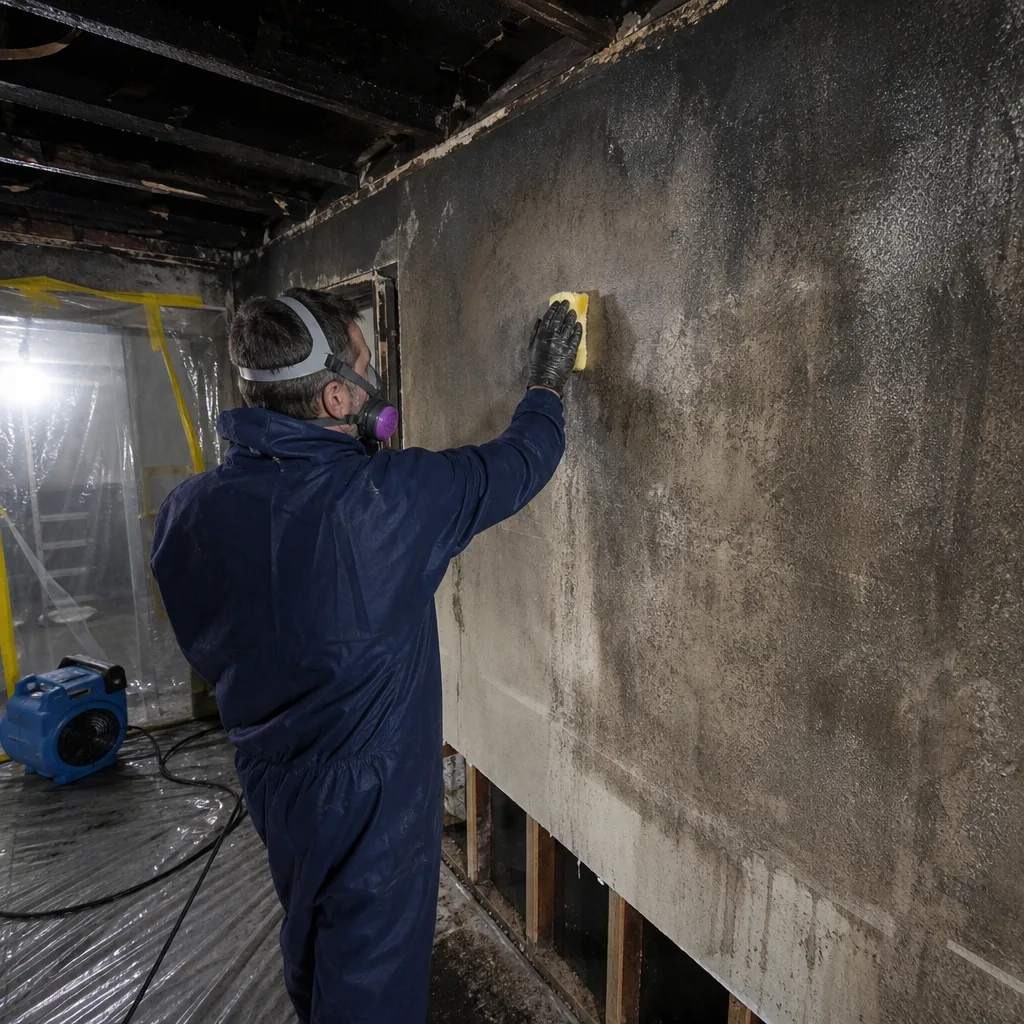
DIY damage restoration in Bellevue is defensible for small, clean, contained losses on hard surfaces where you can document prompt, continuous action. For losses involving porous materials, hidden cavities, contaminated water, or insurance claims, professional restoration is not merely preferable, it is necessary to satisfy policy obligations and avoid liability for secondary damage. The decision framework above replaces guesswork with categorized criteria. When in doubt, professional assessment provides certainty at no cost. The price of an estimate is zero; the price of an incorrect DIY decision can be the full cost of mold remediation, denied insurance coverage, and impaired property value.
Written by Alicia Brennan, Owner at DryMark Restoration Bellevue, serving Bellevue since 2011.