
Last updated September 23, 2026
Free visual inspection and a written scope of work before any mitigation begins - photos, moisture readings, and drying logs go in your claim file
The scope we write is the scope we bill. Anything new gets shown to you, in writing, before we touch it.
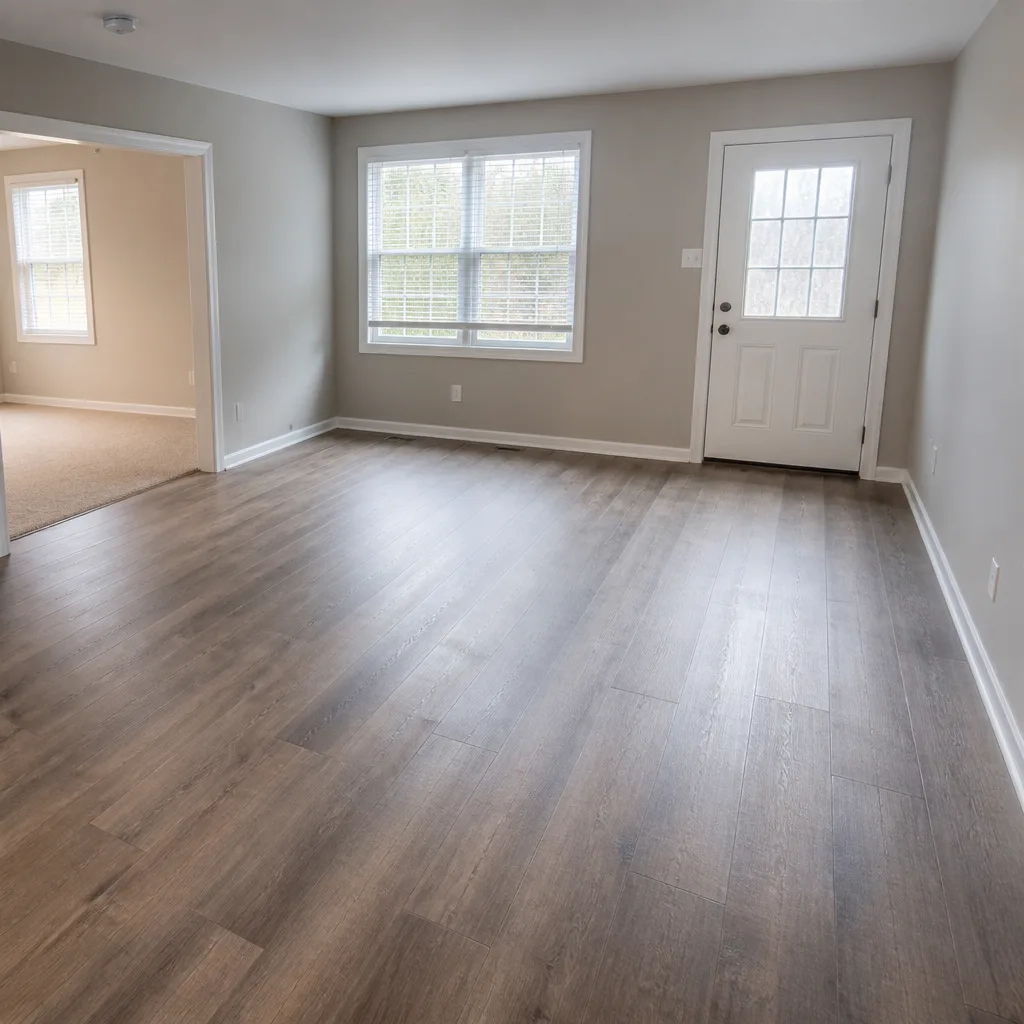
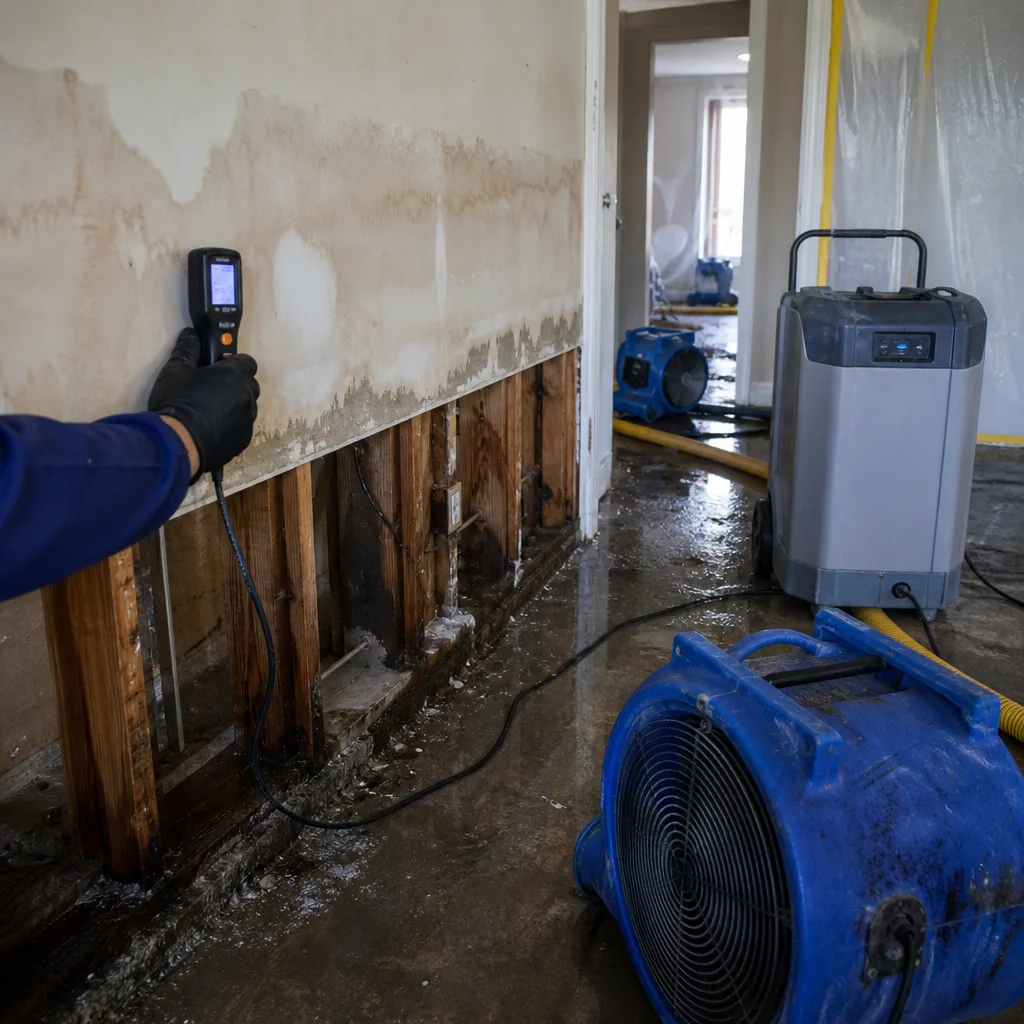 Before
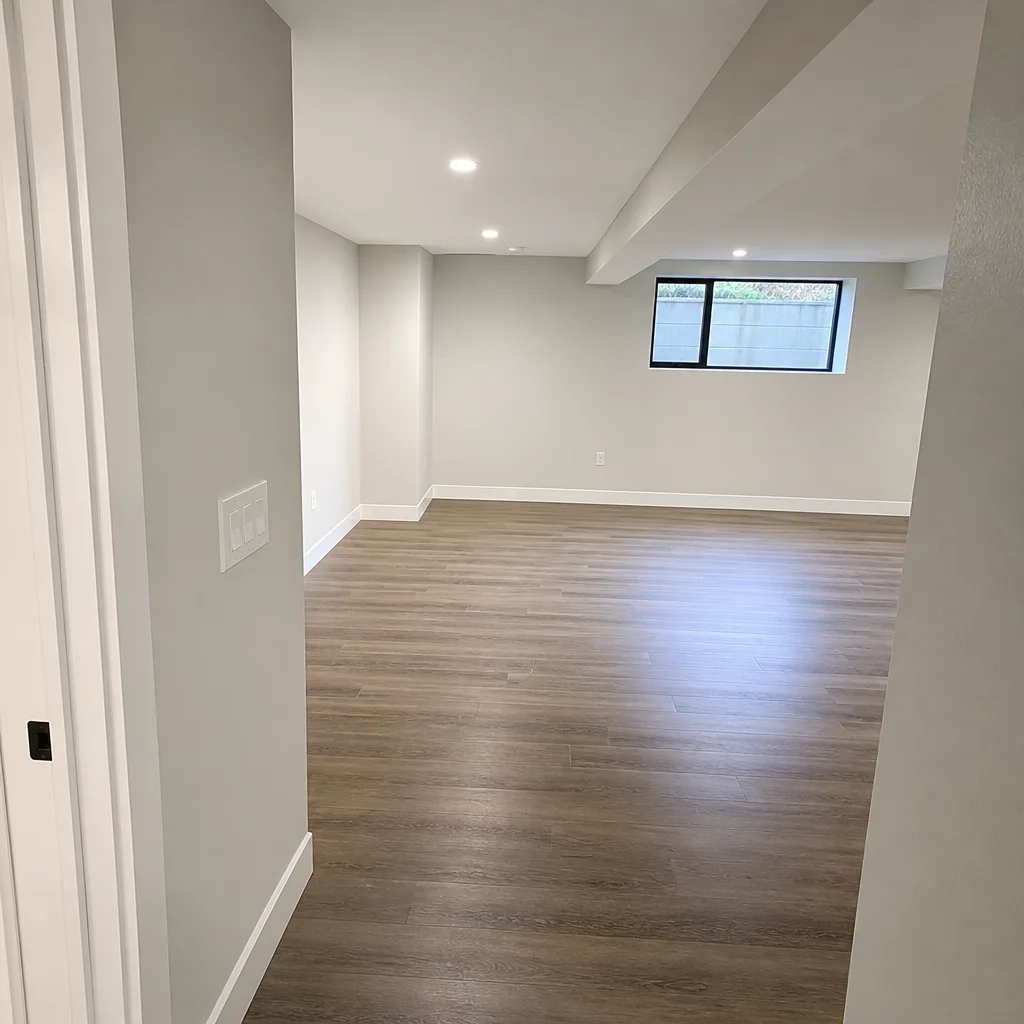 After
After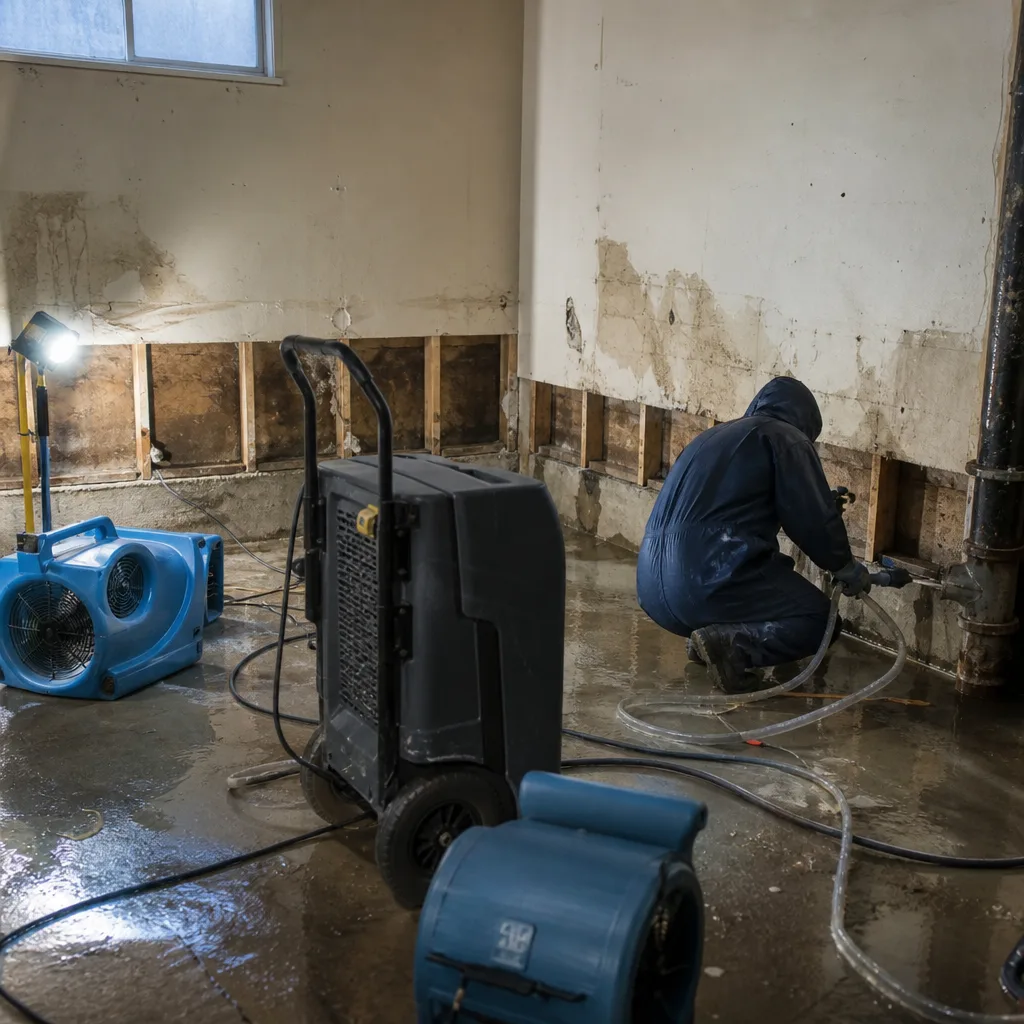 Before
 After
After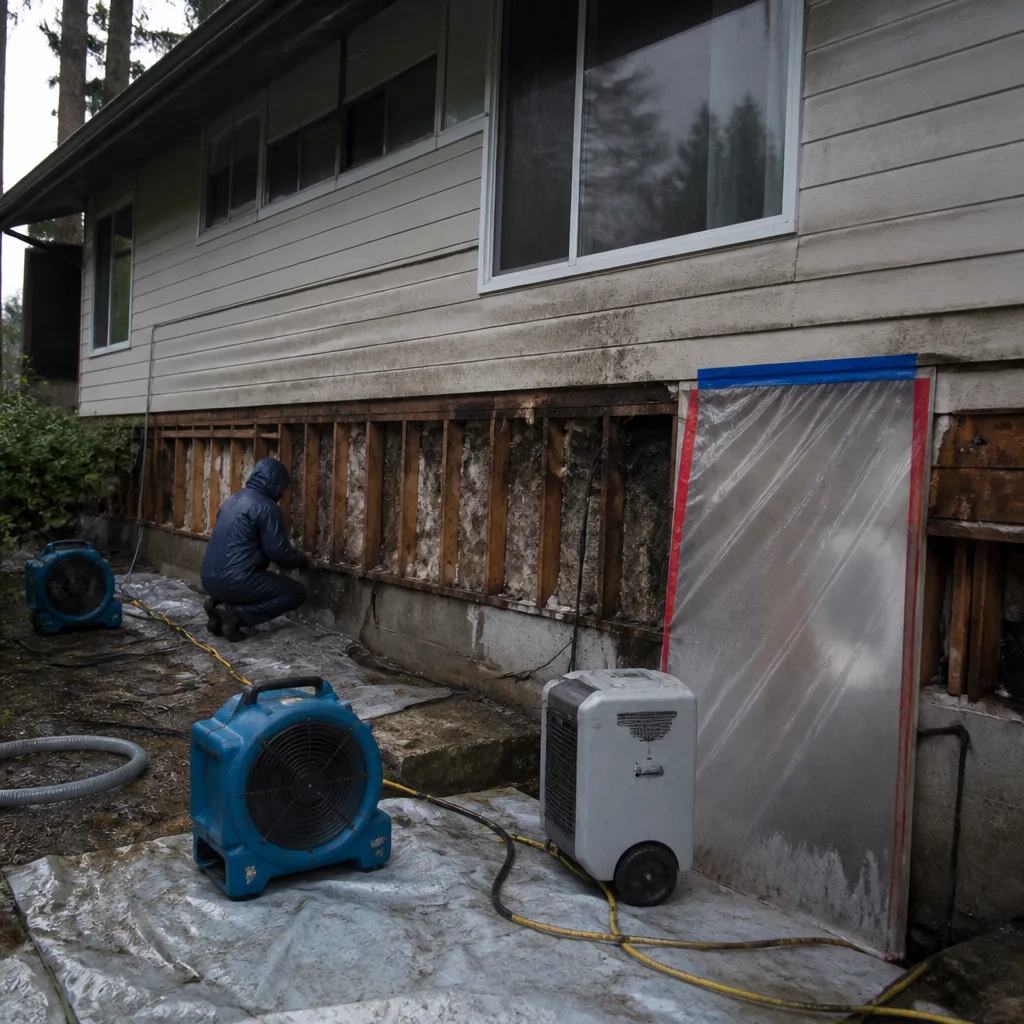 Before
 After
AfterThe Complete Guide to Damage Restoration in Bellevue
Insurance adjusters deny or reduce restoration claims most often not because the damage wasn’t real, but because the contractor’s documentation didn’t match the invoice line items. This gap starts on day one and cannot be closed after the fact. In Bellevue, where ambient moisture averages 75-80% for eight months of the year and basements in neighborhoods like Bridle Trails and Newport Shores sit below the water table, that documentation problem is compounded by climate conditions that demand precise psychrometric tracking from the first reading.
This guide maps the complete damage restoration process through the lens of what an insurer will demand to see, step by step, and complements our Damage Restoration Cost Breakdown: The Bellevue Homeowner’s Reference for 2026. You’ll learn how the first 72 hours determine your claim outcome, why Bellevue’s wet climate changes drying targets, the difference between mitigation and reconstruction scopes, and how to protect yourself from contractor registration gaps that leave you liable for structural work.
Quick Answer
Damage restoration in Bellevue is a two-phase process: mitigation (emergency drying, stabilization, and documentation) followed by reconstruction (structural repair and finishing). A properly documented restoration produces initial moisture readings, daily drying logs with psychrometric data, photo records with timestamps, and a written scope with line-item pricing before any work begins, as detailed in our Damage Restoration Permits, Codes & Inspections in WA: What You Need to Know. In Bellevue’s high-humidity climate, drying targets must be adjusted downward from standard national tables, and confusing mitigation with reconstruction on a single invoice is the most common reason insurance supplements get rejected.
Table of Contents
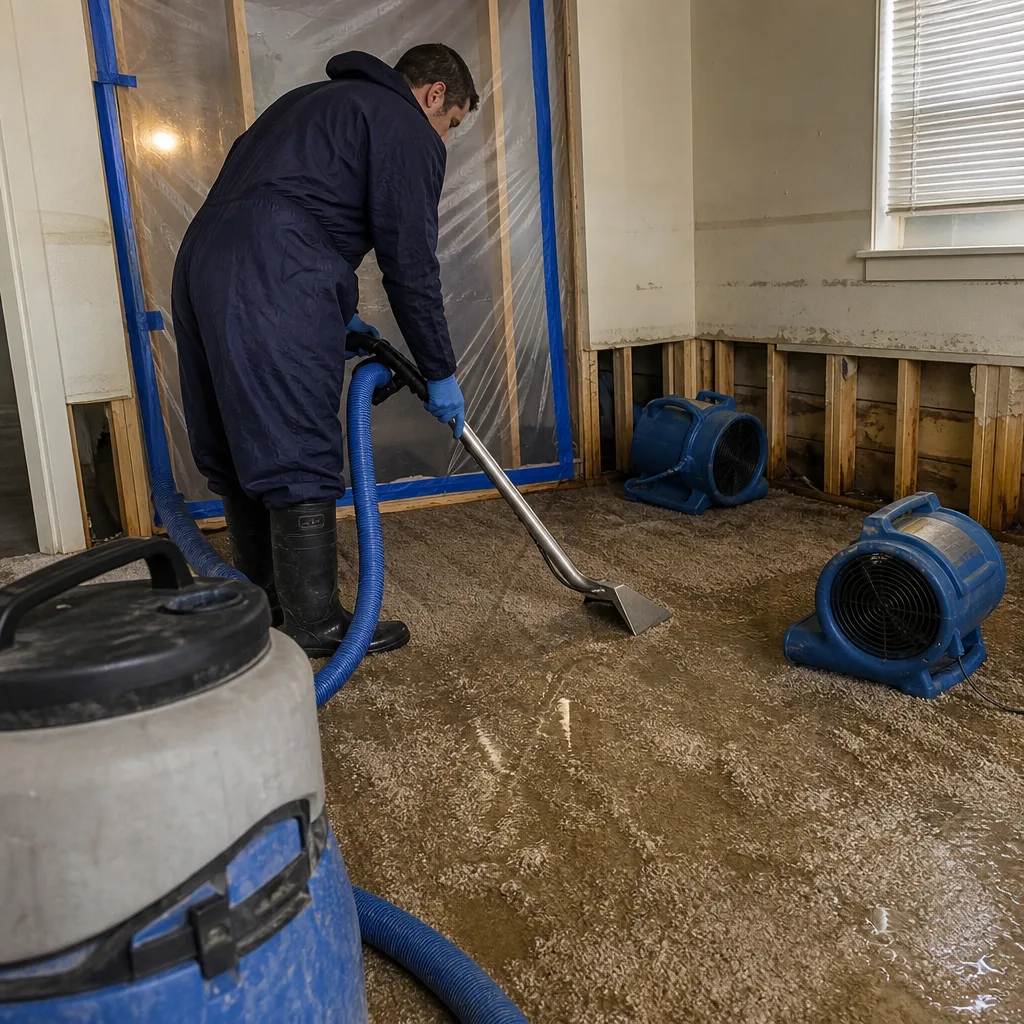
- Why Documentation Decides Claims, Not Drama
- How Bellevue’s Climate Changes Your Drying Targets
- Mitigation vs. Reconstruction: The Invoice Mistake That Kills Claims
- Phase-by-Phase Timeline: First Call to Final Inspection
- The Documentation Chain: What Insurers Actually Review
- Washington Contractor Registration and Homeowner Liability
- Choosing a Restoration Company in Bellevue
- Common Mistakes to Avoid
- When to Call a Professional
- Frequently Asked Questions
BeforeAfterWhy Documentation Decides Claims, Not Drama
We’ve restored over 12,000 homes since 2011. The pattern is consistent: the jobs that pay without dispute are not the ones with the most dramatic damage. They’re the ones with the most complete file.
An adjuster’s review follows a simple hierarchy. First, does the scope match the policy language? Second, do the line items have supporting documentation? Third, does the timeline make sense? When a contractor arrives with fans running and no moisture readings taken, the entire invoice becomes negotiable. When daily drying logs show psychrometric data, vapor pressure differentials, and equipment placement maps, the invoice becomes payable.
Psychrometric data is the measurement of air temperature, relative humidity, and dew point that determines how fast materials actually dry. Vapor pressure differential is the force that drives moisture from wet materials into the air. These aren’t academic terms. They’re the numbers that justify every hour of dehumidifier runtime on your invoice.
The documentation gap that costs homeowners their claims was the reason Back to Dry was founded. Alicia Brennan built the company around what she saw as a claims adjuster: contractors who did good work but couldn’t prove it, leaving homeowners to absorb the difference. The Haven Standard was created to close that gap with three non-negotiable requirements: a written price before work begins (Clause 1), a photo record on every visit, and a 365-Day Done Right Promise backed by a signed guarantee.
Here’s what proper documentation looks like from day one:
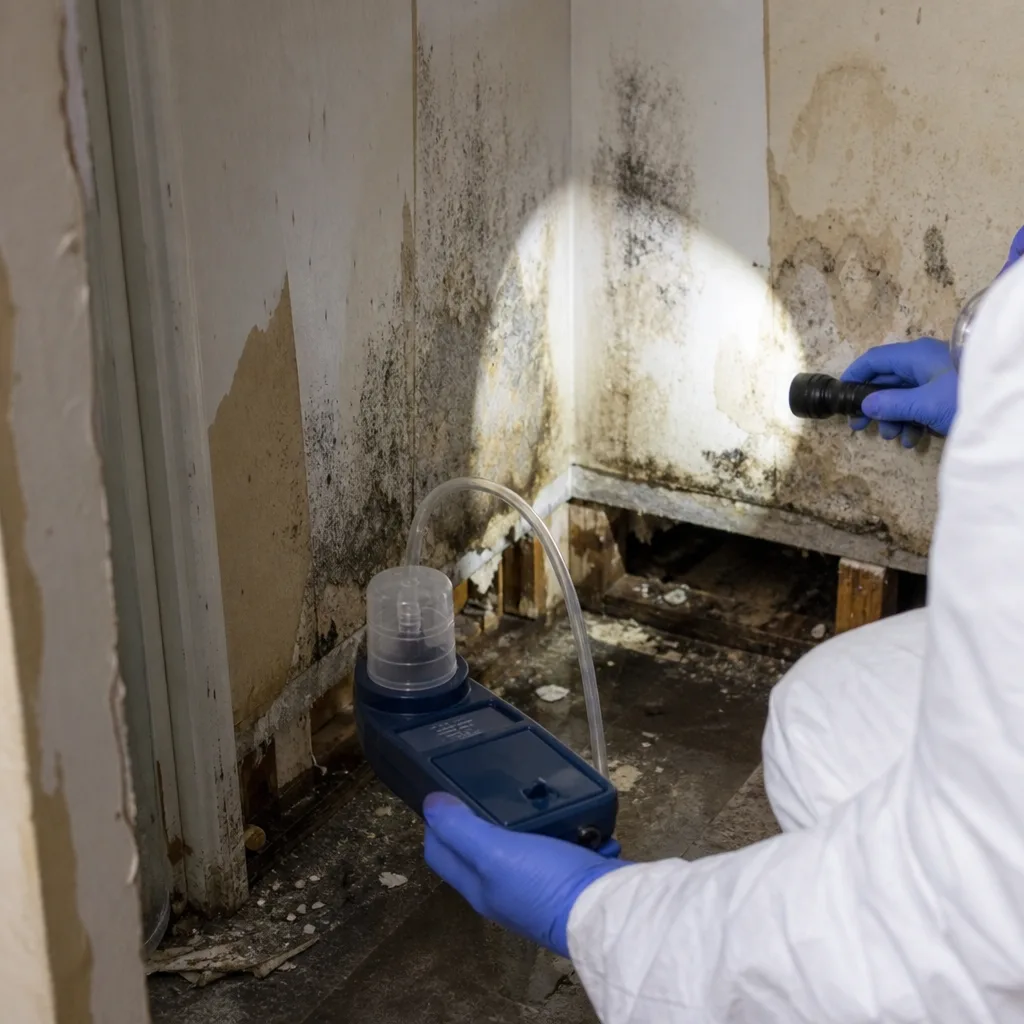
- Initial assessment with moisture readings: Pin meters and non-invasive meters record baseline moisture content in every affected material, with readings taken at multiple depths.
- Photo record with timestamps: Every room, every angle, every piece of damaged material before anything is moved or dried.
- Written scope with line-item pricing: Each task, piece of equipment, and labor hour specified with a price, signed by the homeowner before work starts.
- Daily drying logs: Moisture readings, equipment readings, and atmospheric conditions recorded every 24 hours until dry standards are met.
- Final documentation: Post-drying moisture readings, photo record of completed work, and signed completion certificate.
Missing any step doesn’t just weaken your claim. It creates an opening for the adjuster to reduce or deny specific line items. And once equipment is removed and materials are replaced, you cannot recreate that documentation.
How Bellevue’s Climate Changes Your Drying Targets
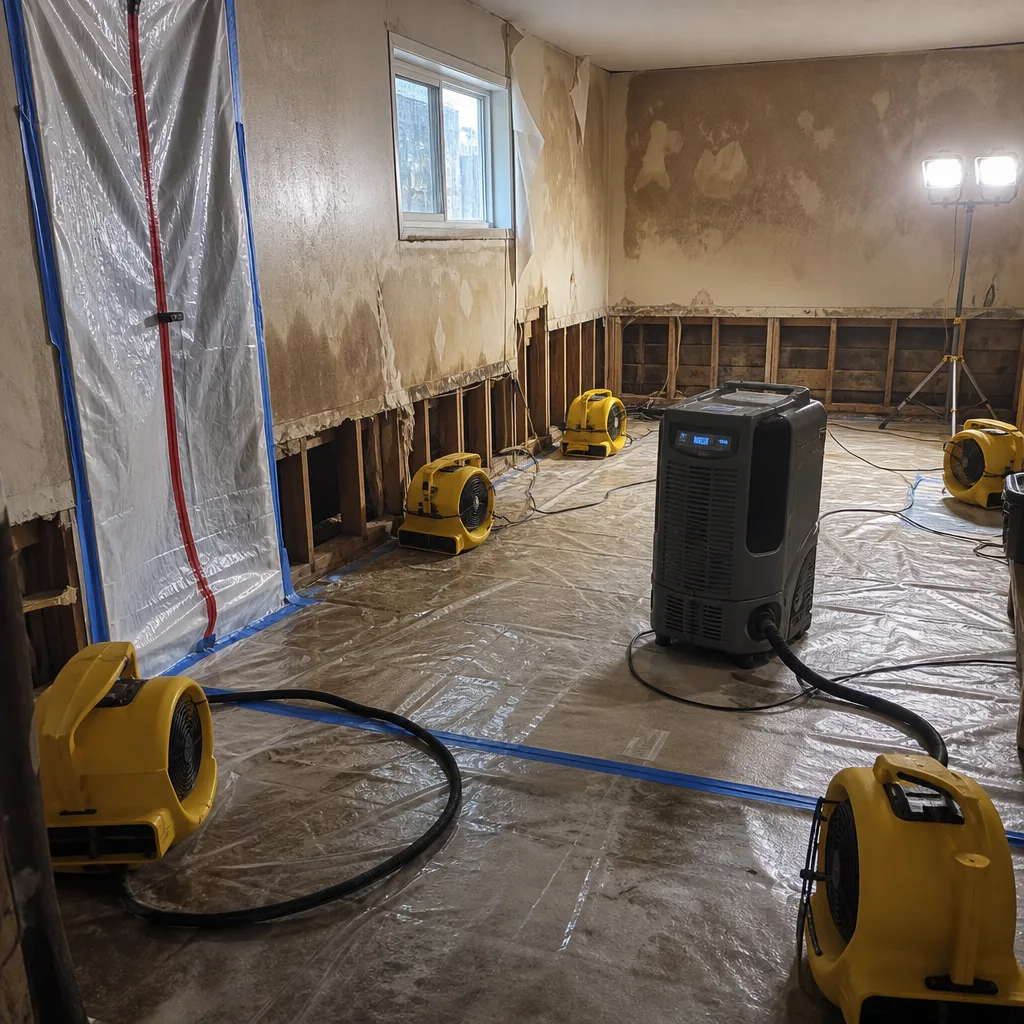
Bellevue sits on the eastern shore of Lake Washington, with the Cascade foothills to the east and the Olympic rain shadow to the west. The result is a marine west coast climate that produces ambient relative humidity averaging 75-80% from October through May, with winter readings regularly exceeding 85% during prolonged rain events-conditions we cover in our Damage Restoration Warning Signs: A Bellevue Homeowner’s Reference Guide.
This matters for restoration because drying equipment doesn’t work against a generic national standard. It works against the actual conditions in your home. When outside air already holds significant moisture, dehumidifiers must extract more water to achieve the same vapor pressure differential. Drying targets that assume 50% ambient humidity, common in drier climates, will leave Bellevue materials wet longer than the timeline predicts.
We’ve measured this repeatedly in Bellevue homes. A standard Class 2 water loss, defined as water wicking up walls less than 24 inches and affecting an entire room, might dry in 3-4 days in Phoenix. In Bellevue’s Newport Hills or Somerset neighborhoods, where basements receive limited solar exposure and ground moisture is consistently high, the same classification often requires 5-7 days with equivalent equipment.
The critical number is the equilibrium moisture content, or EMC. This is the moisture level a material will reach when exposed to specific atmospheric conditions indefinitely. In Bellevue’s climate, wood structural materials have a baseline EMC of 12-14%. That means a wooden subfloor that reads 20% moisture content after a water loss isn’t just 6-8% over “dry.” It’s actively wet enough to support mold growth and structural degradation.
Proper documentation requires that this baseline appear in writing before equipment is set. The initial assessment must record not just the moisture content of affected materials, but the ambient conditions of the space. Without that baseline, there’s no way to prove that drying targets were appropriate for Bellevue’s specific climate conditions.
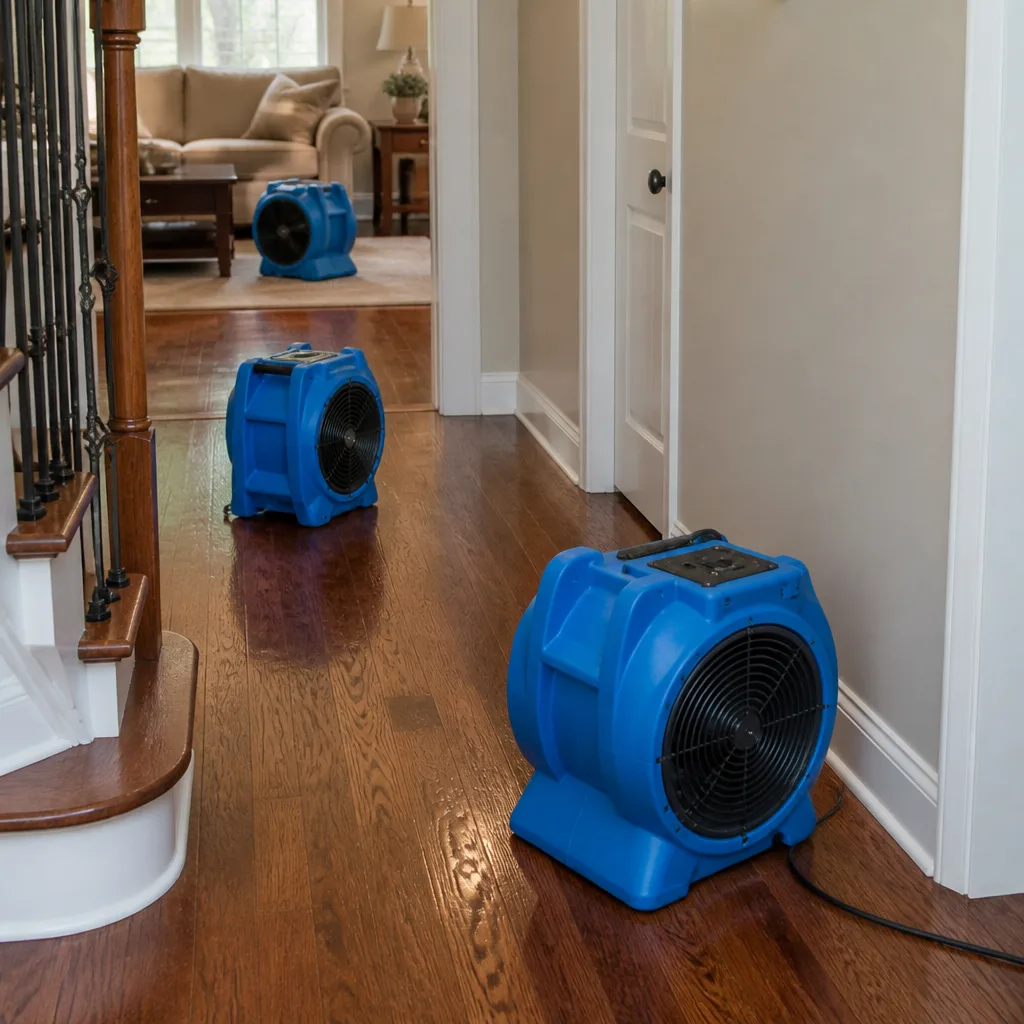
Professional-grade drying systems from Dri-Eaz, Phoenix, and B-Air are selected and positioned based on these readings. A low-grain refrigerant dehumidifier might be standard in a drier climate, but in Bellevue’s high-humidity basements, a desiccant dehumidifier that can achieve lower specific humidity is often necessary to reach target conditions in a reasonable timeframe.
The equipment selection, the drying timeline, and the daily log targets must all reflect Bellevue’s actual conditions. A contractor using national average tables without local adjustment is either inexperienced or indifferent to your claim outcome.
Mitigation vs. Reconstruction: The Invoice Mistake That Kills Claims
This is the single most expensive confusion in restoration billing, and it’s entirely avoidable.
Mitigation is emergency work: water extraction, drying, stabilization, and prevention of further damage. It’s typically covered under most homeowners policies with limited question, provided it’s documented properly. Mitigation must begin immediately, is priced by the hour or by equipment day, and ends when the structure is dry and stable.
Reconstruction is the repair work that follows: replacing drywall, flooring, cabinets, and finishes. It’s scoped like a remodeling project, with fixed prices for defined tasks, and requires adjuster approval before work begins in most cases.
When these phases are combined on a single invoice, or when reconstruction work begins before mitigation is documented as complete, adjusters routinely reject the entire supplement. The reasoning is straightforward: mitigation is urgent and largely non-negotiable. Reconstruction is discretionary and subject to policy limits, depreciation, and scope review. Blending them creates ambiguity that insurers resolve by reducing payment.
We’ve reviewed competitor estimates under our Free Second Opinion service and seen this error repeatedly. A contractor in Bellevue’s Crossroads area submitted a $47,000 invoice with water extraction, drying, and full kitchen replacement on a single document. The adjuster paid $12,000 for mitigation and denied the reconstruction entirely, citing lack of scope separation. The homeowner was left negotiating a $35,000 shortfall.
The Haven Standard, Clause 1 requires a written price before work begins. For jobs involving both mitigation and reconstruction, this means two separate written scopes, each with its own line-item pricing. The mitigation scope is executed immediately. The reconstruction scope is submitted to the adjuster for approval, often with a supplement request, before work begins.
This separation also protects the homeowner from scope creep. Once a crew is inside your home with equipment running, the pressure to “just handle the repairs while we’re here” is significant. A written reconstruction scope, agreed separately and in advance, prevents the gradual expansion of work that turns a manageable claim into a disputed one.
The documentation for each phase is also distinct. Mitigation produces drying logs, moisture readings, and equipment records. Reconstruction produces material invoices, labor tickets, and progress photos. Keeping these records separate preserves the clarity that adjusters require for payment.
Phase-by-Phase Timeline: First Call to Final Inspection
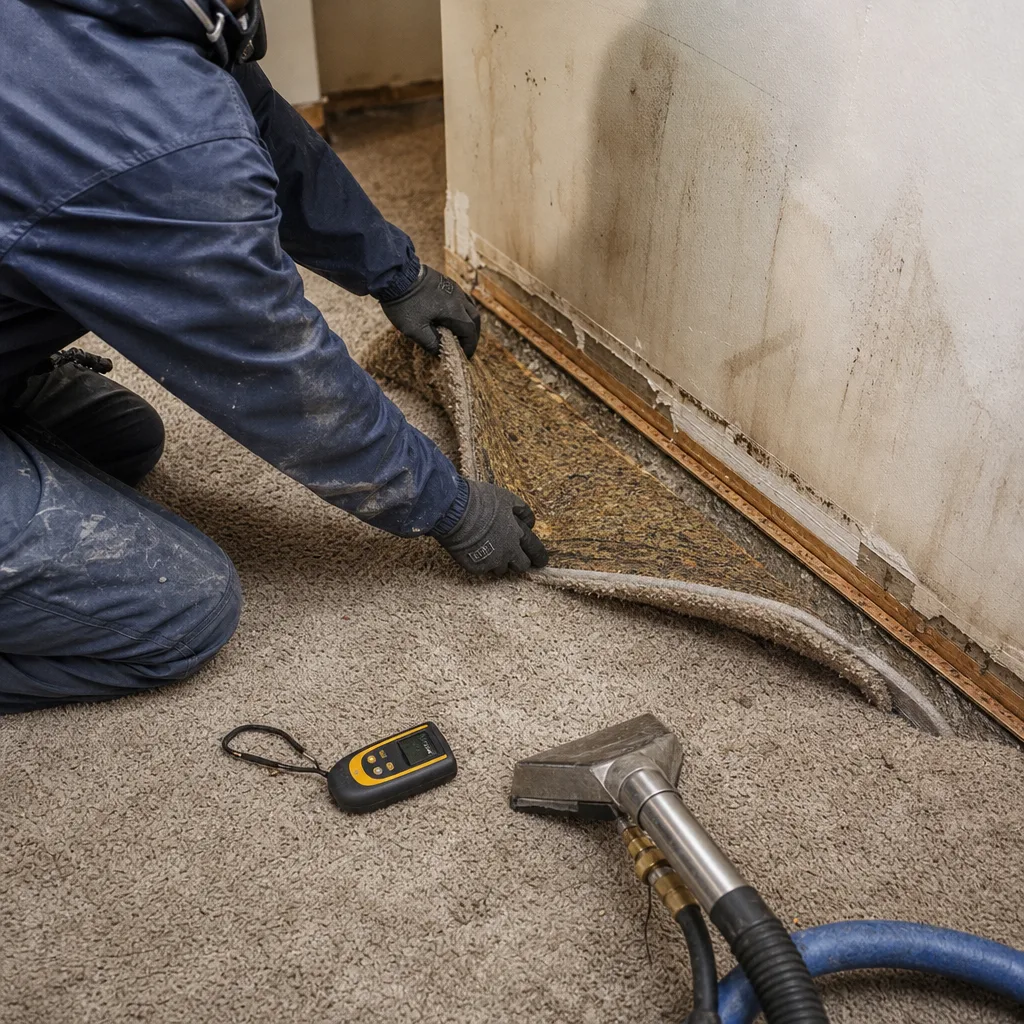
Understanding when decisions happen helps you protect your claim at each point. This timeline applies to a typical water damage loss in Bellevue; fire and biohazard events follow similar documentation principles with additional safety and regulatory steps.
Hour 0-4: Emergency Response and Initial Documentation
The first call triggers two parallel tracks: dispatch of mitigation crews and initiation of documentation. In Bellevue, where traffic patterns on I-405 and SR-520 can significantly affect response times, a local company with crews staged on the Eastside reaches most neighborhoods within 60 minutes during normal conditions.
Upon arrival, the crew’s first task is not extraction. It’s documentation. Photo records of every affected area, moisture readings at multiple points, and atmospheric condition logging establish the baseline that justifies everything that follows. Extraction begins only after this documentation is complete.
Day 1-3: Active Mitigation and Daily Logging
Equipment is positioned based on the initial assessment, with placement maps recorded in the job file. Daily visits, or remote monitoring for stable situations, produce the drying logs that track progress toward target moisture content.
This is where Bellevue’s climate becomes critical. If ambient humidity spikes during a rain event, equipment settings must adjust to maintain vapor pressure differential. These adjustments, and their justification, belong in the daily log.
Day 3-5: Tertiary Drying and Verification
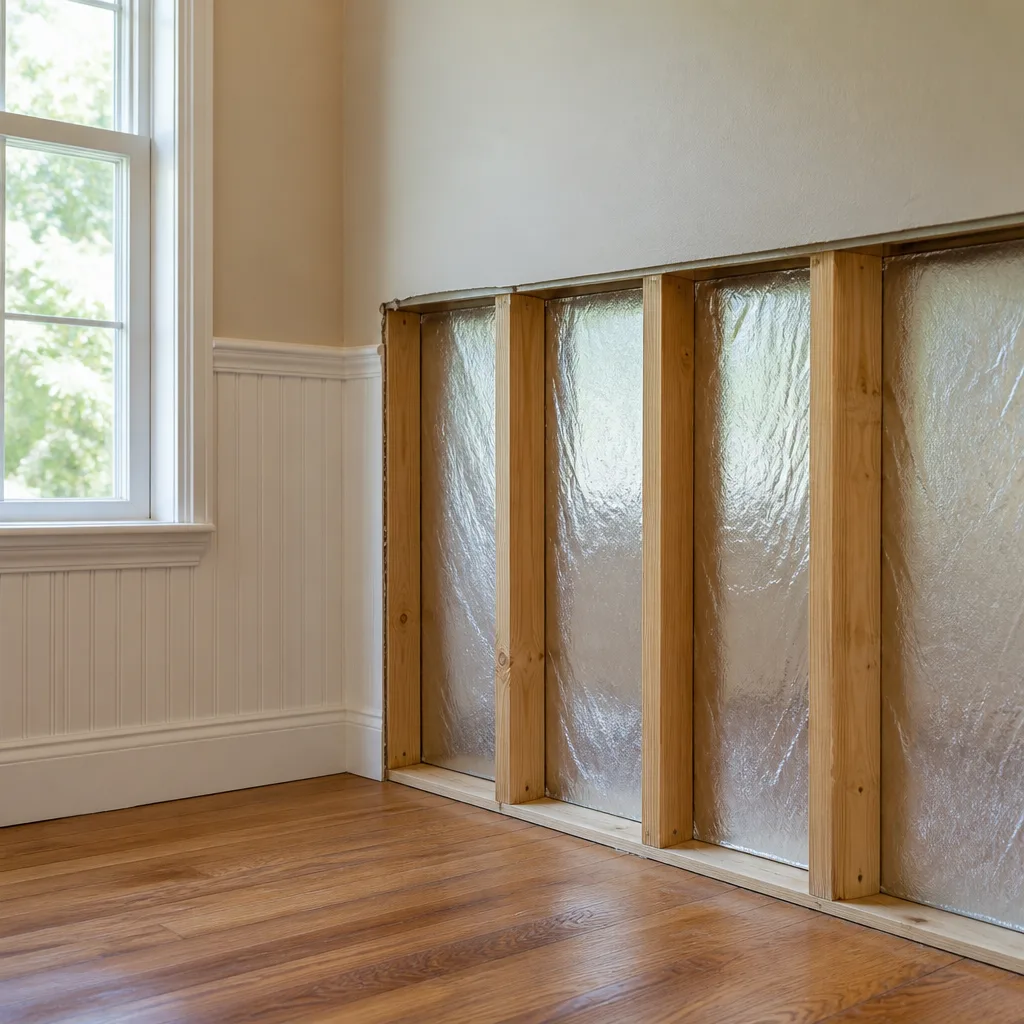
Tertiary drying addresses materials that have reached surface dryness but retain moisture at depth. Dense structural materials, built-in cabinetry, and wall cavities may require specialized equipment like Injectidry systems that force dry air into confined spaces.
Verification requires moisture readings that match or fall below the established EMC for Bellevue’s climate. A reading of 12% on a subfloor might be acceptable in Tucson. In Bellevue, we typically require 10-11% to account for the higher ambient moisture that will re-equilibrate with the material over time.
Day 5-7: Scope Submission and Reconstruction Approval
With mitigation complete and documented, the reconstruction scope is finalized and submitted. This includes material selections, labor estimates, and timeline projections. The adjuster reviews and approves, requests modifications, or denies specific items. No reconstruction work begins until this approval is documented.
Week 2-6: Reconstruction and Progressive Documentation
Reconstruction proceeds with progress photos, material delivery receipts, and labor tracking. Each phase, from rough structural repair to finish work, is documented for final claim reconciliation.
Final: Inspection, Warranty, and File Closure
A final inspection confirms completion against the approved scope. The 365-Day Done Right Promise is activated with a signed warranty. The complete file, including all documentation from initial call through final photo, is delivered to the homeowner for their records.
The Documentation Chain: What Insurers Actually Review
Adjusters don’t review your restoration emotionally. They review a file, and that file must answer specific questions in a specific order. Understanding this review process helps you demand the right documentation from your contractor, and you can find more guides & resources on our blog.
The typical adjuster review follows this sequence:
- Cause and origin: What caused the damage? Is it a covered peril? Photos from the initial visit must show the source and the resulting damage pattern.
- Scope of affected area: What rooms, materials, and systems were affected? The moisture map, a floor plan with readings marked at each test point, establishes this definitively.
- Mitigation necessity: Was the emergency work necessary and reasonable? Daily drying logs with equipment runtime justify the hours and equipment days billed.
- Mitigation completion: Was the structure actually dry when equipment was removed? Final moisture readings, compared to baseline EMC, prove this.
- Reconstruction scope accuracy: Does the repair list match the damaged materials? Pre-mitigation photos, material identification, and square footage calculations support this.
- Reconstruction pricing reasonableness: Are labor and material costs in line with local market rates? In Bellevue, where construction costs run 15-20% above national averages, local pricing data is essential.
Each of these review points corresponds to a specific document in the chain. Missing any link creates an opening for reduction or denial.
The photo record is particularly critical and frequently inadequate. We’ve reviewed files where contractors provided 12 photos for a $30,000 job. The Haven Standard requires comprehensive photo documentation: every room from multiple angles, close-ups of damage, equipment placement, moisture meter readings with the reading visible, and progressive shots showing change over time. These photos are timestamped and organized by visit, creating a visual timeline that supports every line item.
Direct insurance billing, when available, depends entirely on this documentation chain. A contractor who cannot produce complete records cannot effectively advocate for your claim with the adjuster. The documentation is the advocacy.
Washington Contractor Registration and Homeowner Liability
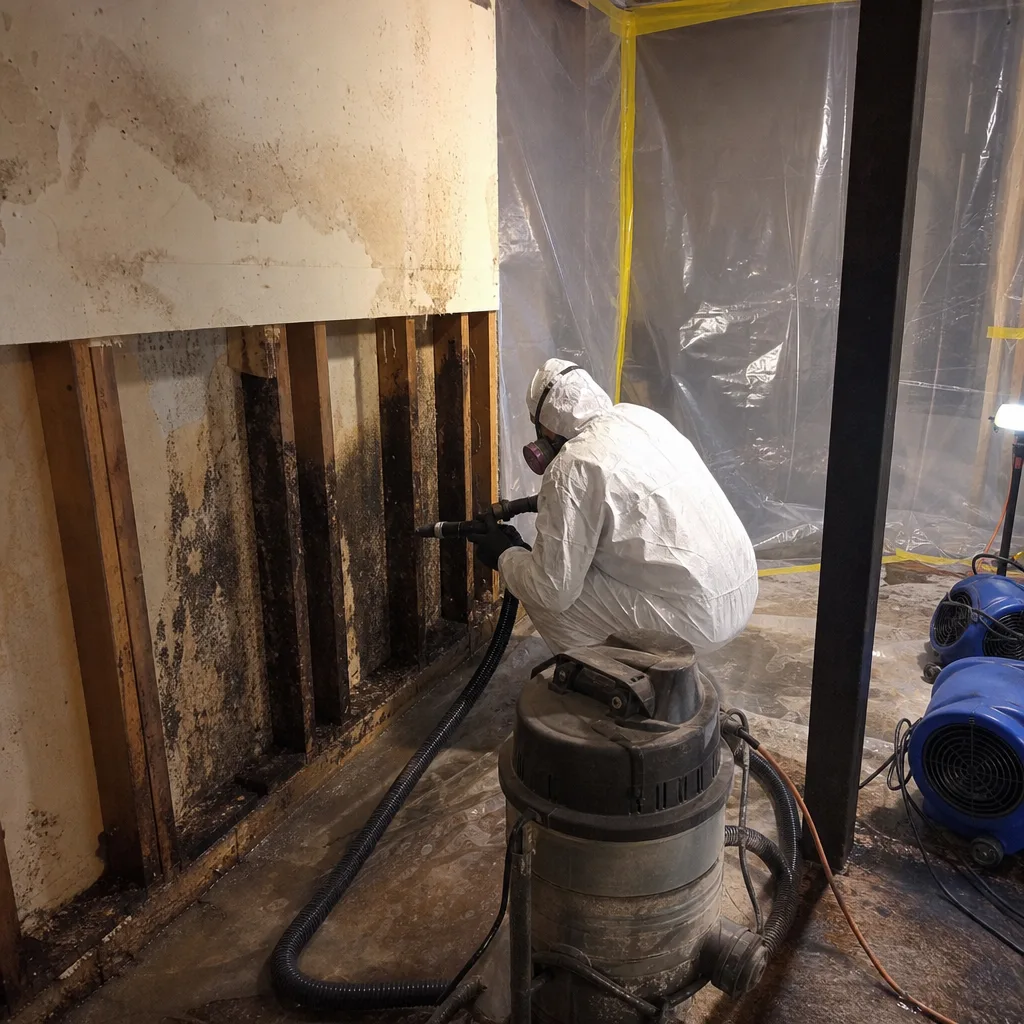
Washington State requires all contractors performing work valued at $1,000 or more to register with the Department of Labor and Industries, carry a surety bond, and maintain liability insurance. This requirement applies to restoration work, including both mitigation and reconstruction, and it’s not a formality.
An unregistered contractor performing structural work creates direct liability for the homeowner. If the work fails, if a worker is injured, or if a subcontractor isn’t paid, the homeowner becomes the responsible party. In restoration, where structural drying often involves opening walls, removing structural materials, and later rebuilding, the registration gap is a significant exposure.
We’ve encountered situations in Bellevue’s older neighborhoods, like the areas near Bellevue Square built in the 1960s and 1970s, where unregistered crews performed demolition and preliminary drying, then disappeared when reconstruction complexity exceeded their capacity. The homeowner was left with an open structure, an incomplete file, and no clear path to insurance payment.
Verification is simple and should be routine. Every contractor should provide their Washington State contractor registration number before work begins. This number can be verified through the Department of Labor and Industries online lookup. Background-checked, uniformed technicians with license numbers on record are not a marketing claim. They’re a basic compliance requirement that protects you from liability.
The registration requirement also affects your insurance claim. Most policies contain language requiring work to be performed by “qualified” or “licensed” contractors. Using an unregistered contractor, even unknowingly, can give the insurer grounds to deny portions of the claim related to that work.
At DryMark Restoration Bellevue, every technician is licensed, insured, and verified before arriving at your home. The registration number is available on request, and we maintain the bonding and insurance coverage that Washington law requires for your protection.
Choosing a Restoration Company in Bellevue
The selection criteria that matter are measurable, not emotional. Here’s what to verify before signing any agreement:
- Written price before work begins: Not an estimate, not a range, not a “we’ll figure it out.” A specific, line-item price for the defined scope. Haven Standard, Clause 1 exists precisely because this is where most claims start to go wrong.
- Documentation commitment: Ask to see a sample drying log and photo record from a completed job. The quality of their documentation on a previous job predicts the quality on yours.
- Local response capability: A company with crews based on the Eastside, not dispatched from Seattle or Tacoma, can reach Bellevue neighborhoods faster and return for daily monitoring without travel-time surcharges.
- Insurance billing experience: Direct adjuster coordination, including photo documentation formatted for claim submission, reduces your administrative burden and improves payment speed.
- Equipment inventory and capability: Professional-grade drying systems from Dri-Eaz, Phoenix, XPOWER, B-Air, and Injectidry, with the range to handle everything from standard residential drying to complex structural and hardwood floor systems.
- Written warranty: A signed guarantee, not a verbal assurance. The 365-Day Done Right Promise under The Haven Standard provides specific recourse if work fails to meet standards.
References from completed jobs in your specific Bellevue neighborhood are more valuable than generic testimonials. Drying a ranch home in Lake Hills with a crawl space foundation involves different challenges than a hillside home in West Bellevue with a daylight basement. Local experience with your specific building type and exposure matters.
Water Damage Restoration in Bellevue requires these verification steps more urgently than any other service, because the documentation clock starts at the moment of loss and cannot be paused.
Common Mistakes to Avoid
- Waiting for the adjuster before starting mitigation: Most policies require “reasonable” emergency action to prevent further damage. Waiting for adjuster approval before extracting water or setting drying equipment can result in denial of secondary damage claims. Document everything and begin immediately.
- Accepting a single combined estimate for mitigation and reconstruction: This virtually guarantees a supplement dispute. Insist on separate scopes with separate approvals, even if the same contractor performs both phases.
- Not verifying contractor registration: An unregistered crew performing structural work in Bellevue exposes you to liability and can void insurance coverage. Verify the registration number through L&I before work begins.
- Discarding damaged materials before documentation: That waterlogged carpet, the warped baseboard, the saturated drywall, they’re all evidence. Photo them in place, then remove. Disposal before documentation destroys your ability to prove the scope.
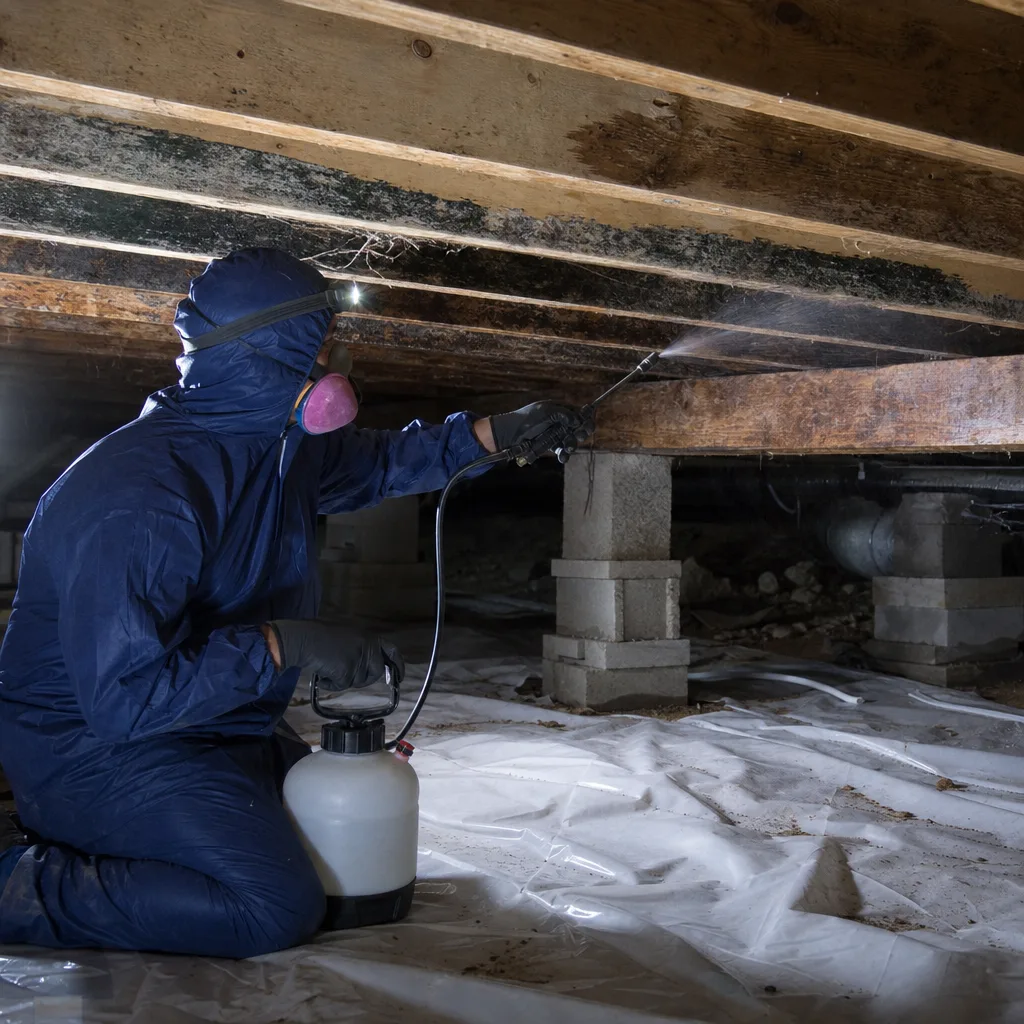
- Ignoring Bellevue’s ambient moisture in drying targets: A contractor who uses standard drying tables without adjusting for local conditions will declare your structure dry before it actually is, leading to mold, odor, and failed final inspections.
- Signing a vague scope with “TBD” line items: Haven Standard, Clause 1 prohibits this precisely because it enables scope creep. Every task, every material, every hour must be specified with a price before work begins.
- Failing to request the complete file at job completion: Your insurance company has the documentation. Your contractor has the documentation. If you don’t also have it, you have no independent ability to dispute a denial or support a future claim.
When to Call a Professional
Call immediately when water is actively spreading, when mold is visible or suspected, when fire or smoke damage has occurred, or when sewage or biohazard contamination is present. These situations worsen with time and create documentation gaps that weaken claims.
Also call when you’ve received an estimate from another contractor that seems incomplete, lacks line-item pricing, or combines mitigation with reconstruction. Our Free Second Opinion service reviews any competitor’s written estimate at no charge, and we’ve frequently identified scope gaps that would have cost homeowners thousands in uncovered work.
DryMark Restoration Bellevue offers free estimates in Bellevue. A live person answers every call, 24 hours a day, 7 days a week, with no voicemail on emergency lines. Call (425) 696-6320 to speak with our dispatch team.
Frequently Asked Questions
Mitigation for a typical residential water loss in Bellevue ranges from $3,200 to $8,500 depending on affected square footage, material classification, and drying duration. Reconstruction costs vary widely based on finishes, with standard-grade replacement of drywall, paint, and flooring in a single room typically running $4,000 to $12,000. Every job is quoted in writing with line-item pricing before work begins. Call (425) 696-6320 for a specific estimate, estimates are free.
Most homeowners policies cover sudden and accidental water damage, fire, and storm damage, subject to your deductible and policy limits. Coverage for mold remediation varies significantly by policy and often has sub-limits. The key factor is documentation: a well-documented mitigation with complete drying logs and photo records is paid at higher rates than an undocumented one. We coordinate directly with adjusters and provide the formatted documentation they require. Call (425) 696-6320 to discuss your specific policy situation.
Our crews are staged on the Eastside and reach most Bellevue neighborhoods within 60 minutes under normal traffic conditions. Response to DryMark Restoration Bellevue home emergency calls is available 24 hours a day, 7 days a week with live dispatch, no voicemail. For active water losses, faster response limits secondary damage and reduces total claim cost.
Surface cleaning of a small, contained area, less than 10 square feet, may be manageable for a homeowner. Anything larger, anything involving HVAC systems, anything behind walls or under flooring, or any water source that sat for more than 48 hours requires professional assessment. Mold in Bellevue’s high-humidity climate spreads actively once established, and improper disturbance releases spores that contaminate previously unaffected areas. We provide free assessments to determine actual scope.
Mitigation is emergency drying and stabilization, billed by time and equipment, typically covered promptly. Reconstruction is repair and replacement, scoped like remodeling, subject to adjuster approval and policy limits. Combining them on one invoice creates ambiguity that adjusters resolve by reducing payment. Separate scopes with separate approvals protect your claim. This separation is required under The Haven Standard for every job we perform.
We do, directly. Our documentation, formatted for claim submission, includes photo records with timestamps, daily drying logs with psychrometric data, and line-item scopes that match adjuster review protocols. We participate in three-way calls, attend adjuster inspections when requested, and provide supplemental documentation for disputed items. You remain informed and in control, but you’re not managing the paperwork. This coordination is standard on every Fire & Smoke Damage Restoration in Bellevue job and all other services we provide.
Mitigation typically requires 3-7 days in Bellevue’s climate, with reconstruction adding 2-6 weeks depending on scope and material availability. The total timeline is often determined by adjuster approval speed for reconstruction, not by our work pace. Proper documentation at each phase prevents delays caused by supplement requests and disputes. We provide a written timeline with every scope.
The Bottom Line
The restoration process in Bellevue is not a single event but a documented sequence where each phase creates the evidence that justifies the next. Insurance adjusters pay claims that are provable, not dramatic. The first 72 hours determine whether your file will be payable or disputed, and that outcome depends on documentation: moisture readings, daily drying logs, photo timestamps, and written scopes with line-item pricing.
Bellevue’s wet climate demands local expertise in drying targets and equipment selection. The distinction between mitigation and reconstruction must be maintained in separate scopes to preserve claim integrity. Washington contractor registration is a legal requirement that protects you from liability, not an optional credential.
Every job we perform under The Haven Standard includes a written price before work begins, a photo record on every visit, and a 365-Day Done Right Promise backed by a signed guarantee. We’ve applied this standard to over 12,000 homes since 2011.
Call (425) 696-6320 for a free estimate or a free second opinion on any competitor’s written estimate. A live person answers 24 hours a day, 7 days a week.
Written by Alicia Brennan, Owner at DryMark Restoration Bellevue, serving Bellevue since 2011.