
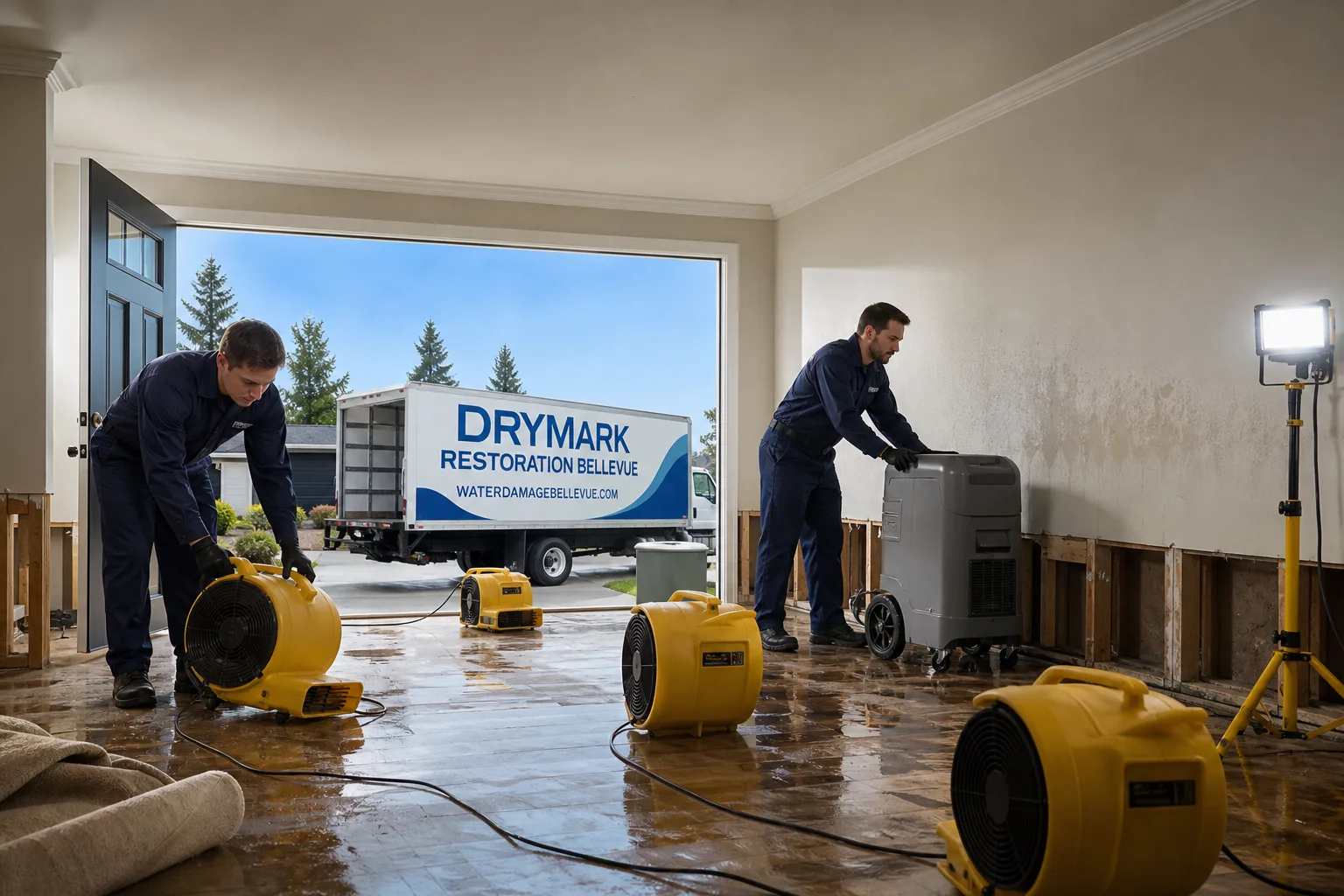
Free visual inspection and a written scope of work before any mitigation begins - photos, moisture readings, and drying logs go in your claim file
The scope we write is the scope we bill. Anything new gets shown to you, in writing, before we touch it.
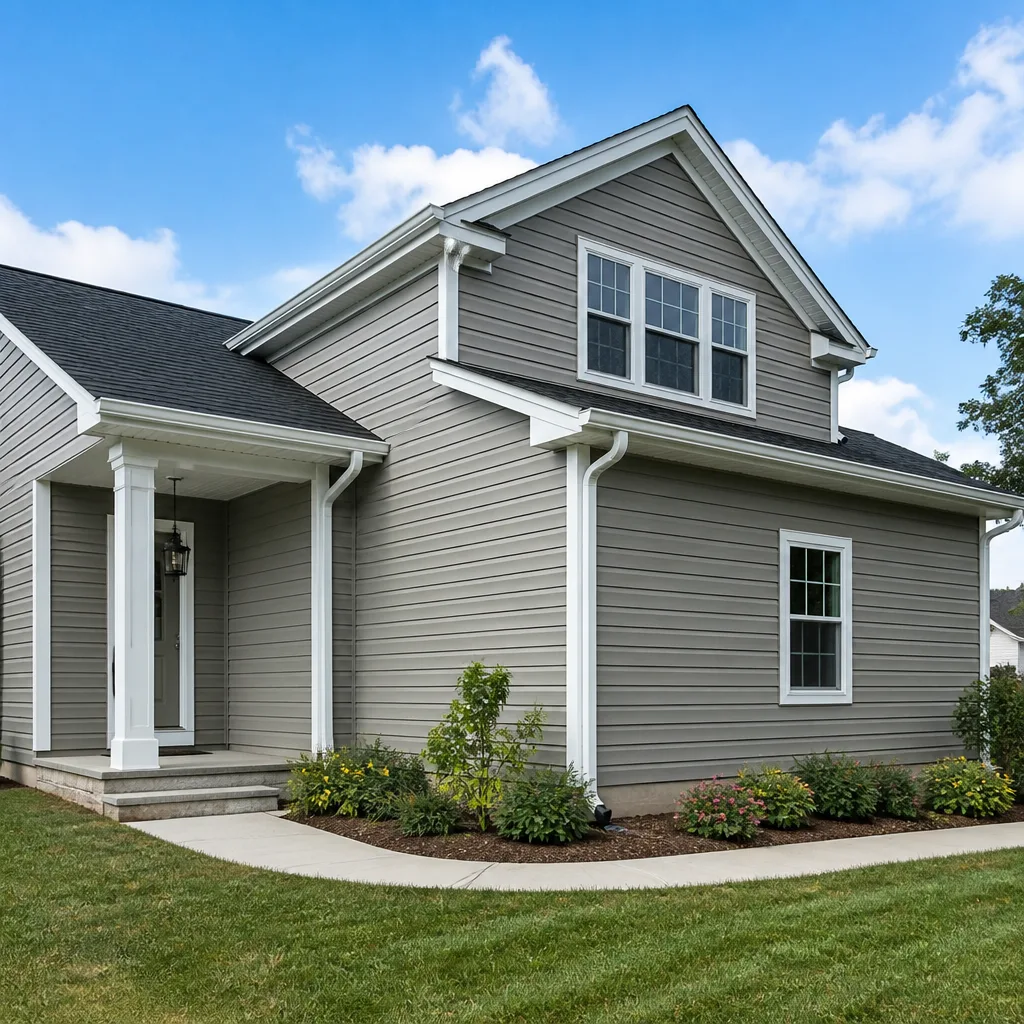
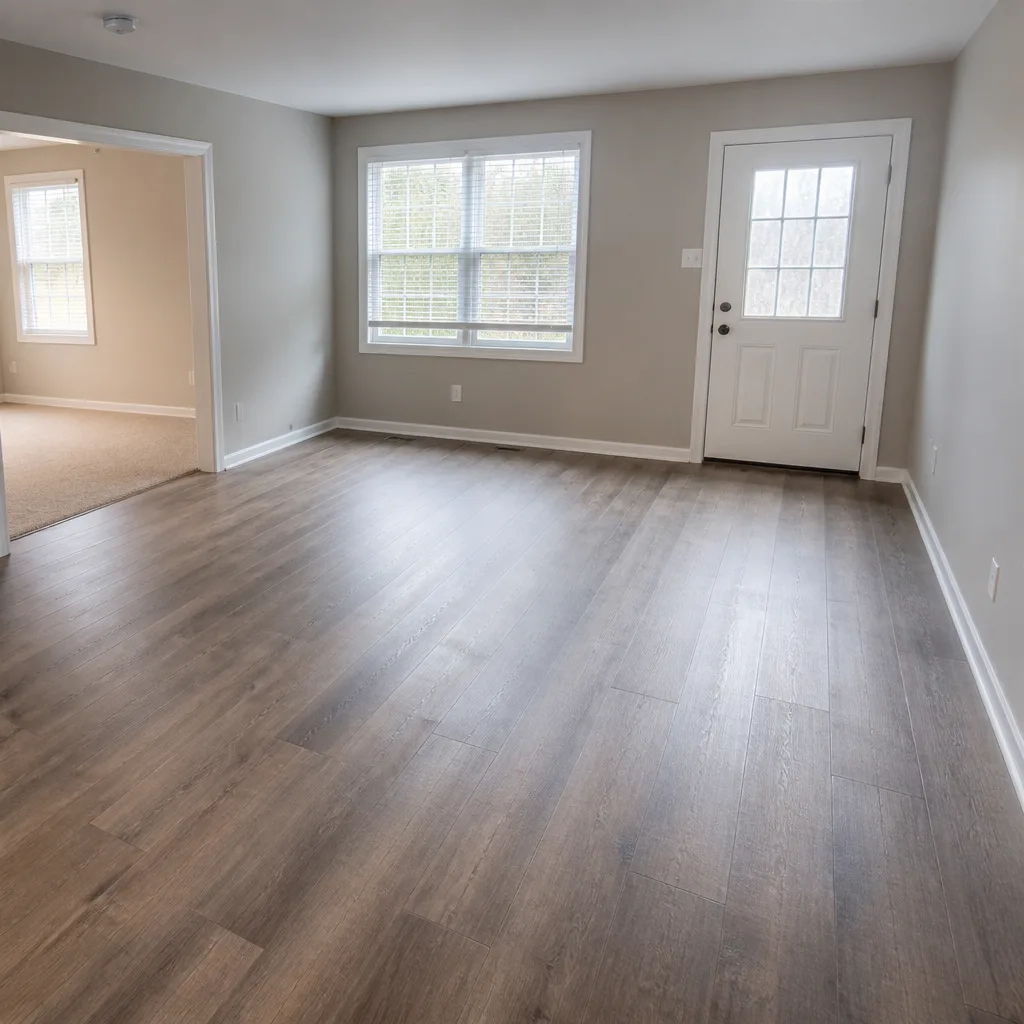
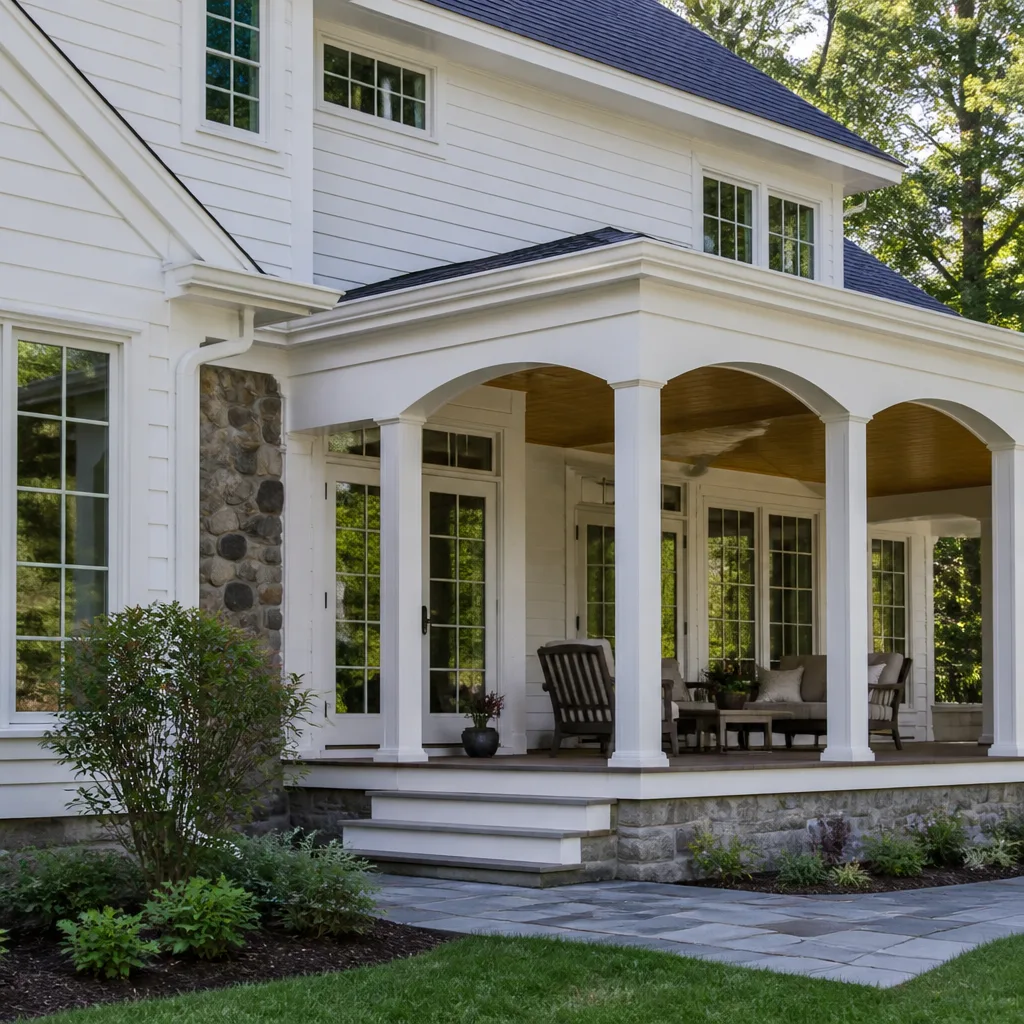
 Before
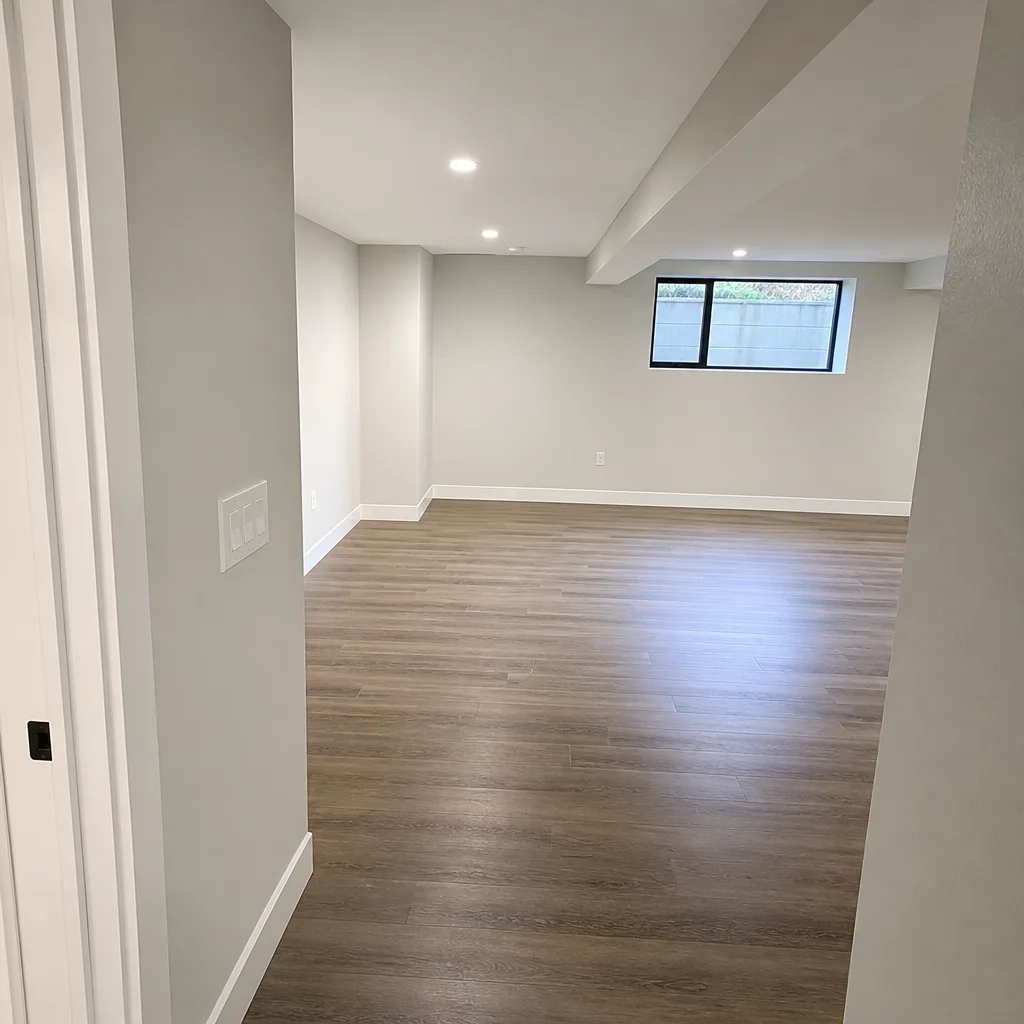 After
After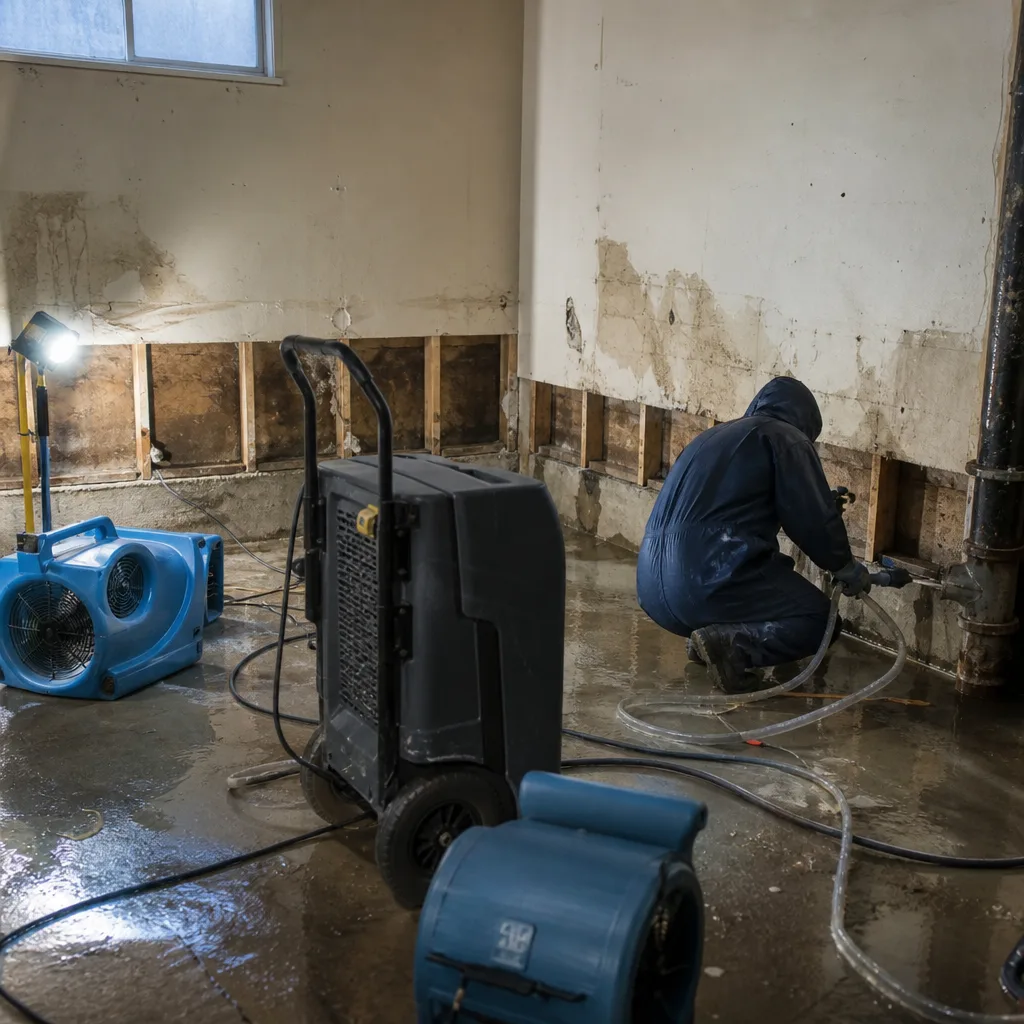 Before
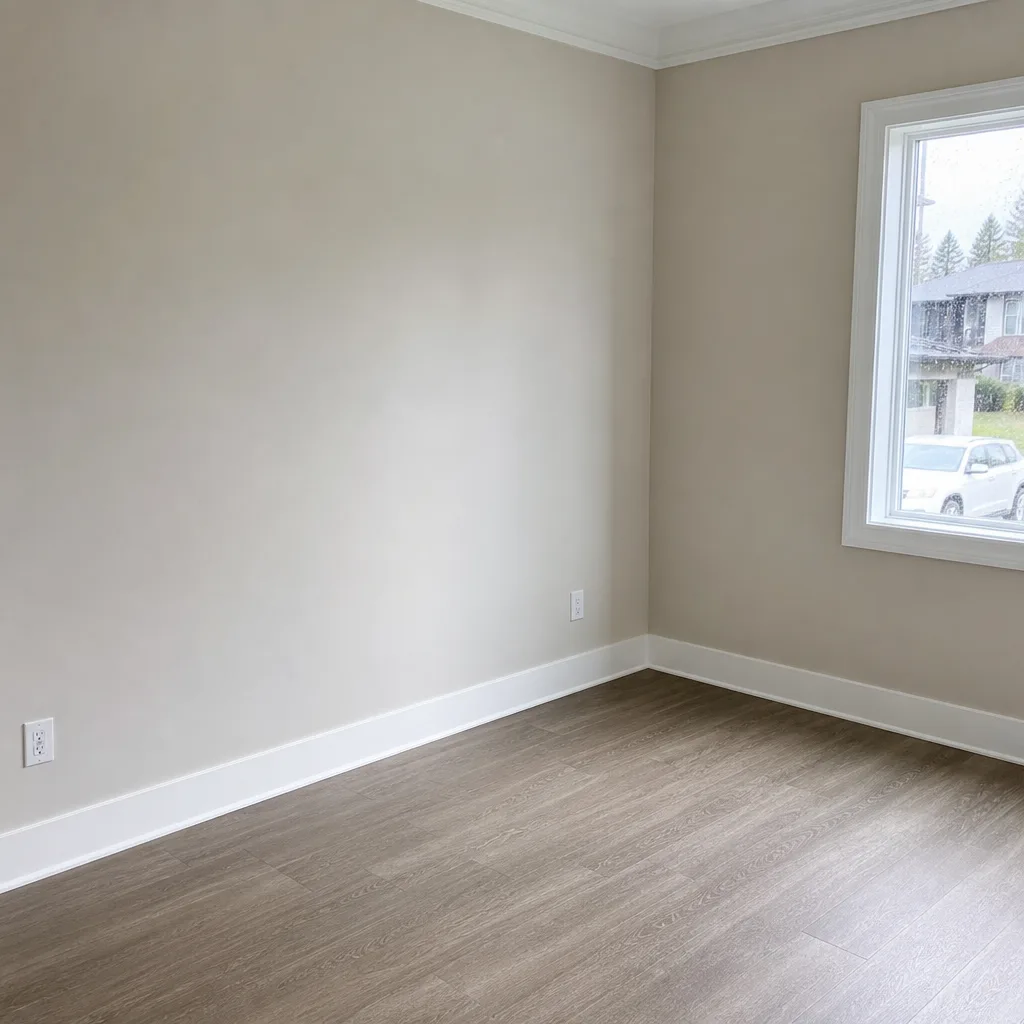 After
After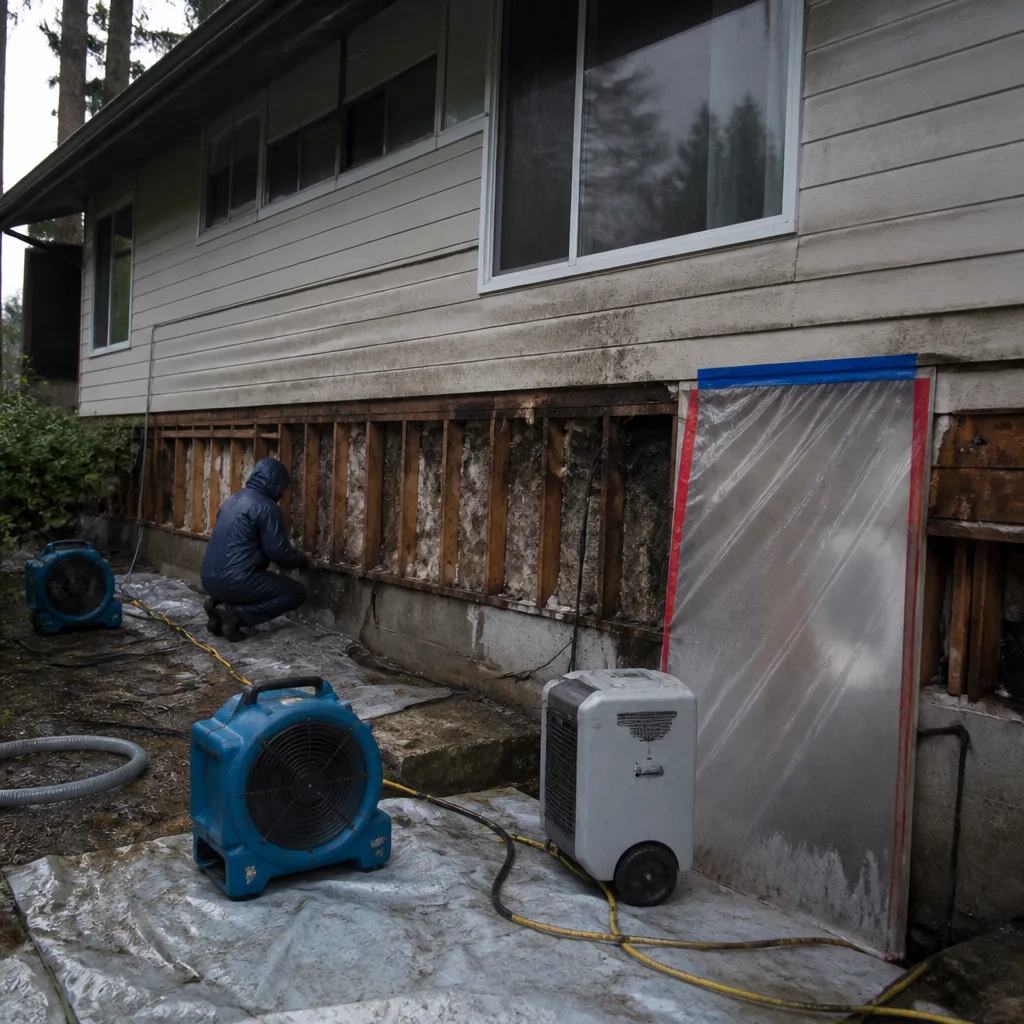 Before
 After
AfterFast, Reliable Water Damage Restoration Across SeaTac
Water damage restoration in SeaTac typically costs $2,800-$6,500 for a standard residential job, with emergency extraction starting at $950 and full structural drying running $1,800-$4,200 depending on affected square footage and whether hidden cavity saturation is involved. Most SeaTac homeowners see our crews within 45-60 minutes of calling (425) 696-6320, with 24/7 live dispatch from our Seattle office and no voicemail trees.
We know SeaTac’s homes. The 1950s-1970s ranches and split-levels near the airport, the rental conversions on South 176th Street and 24th Avenue South, the Port of Seattle Noise Insulation Program retrofits that changed how these buildings dry. When a supply line fails at 2 a.m. or October’s third consecutive storm pushes water through aging composition roofing, you need someone who understands what’s behind those walls, not just what’s on the surface.
Why DryMark Restoration Bellevue Is SeaTac’s Preferred Water Damage Restoration Company
We’ve restored water-damaged properties in SeaTac since 2011, completing over 12,000 jobs across our service area with a written price before work started on every one. Our SeaTac customers consistently note in reviews that our documentation, not our promises, won their trust - room-by-room moisture readings, photo records on every visit, and drying logs that their adjusters accepted without dispute.
Response time to SeaTac averages under an hour because our Seattle office coordinates dispatch directly to the airport corridor, the McMicken Heights neighborhood, and the commercial corridors along International Boulevard. We don’t route calls through a national queue.
Our technicians are background-checked, uniformed, and licensed, with license numbers provided on request. Every job carries the 365-Day Done Right Promise under The Haven Standard - if it’s not done right, we make it right. Not a verbal assurance. A signed guarantee.
We also offer a Free Second Opinion on any competitor’s written estimate. Bring us their scope and we’ll review it at no charge. Haven Standard, Clause 1: the written price comes before any work begins, with no exceptions.
Our Water Damage Restoration Services in SeaTac
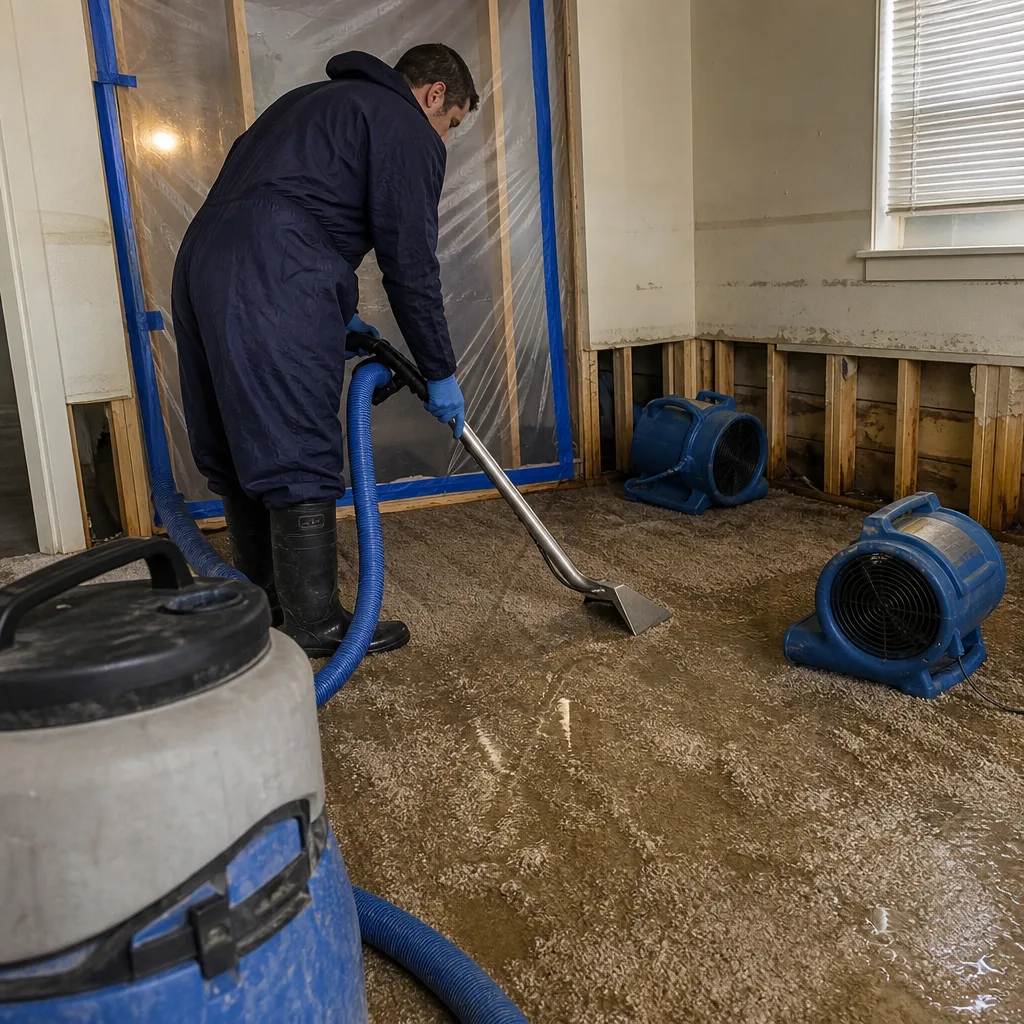
Emergency Water Extraction
When a burst pipe floods your SeaTac home at midnight or a backed-up floor drain saturates your rental unit near the airport, we extract standing water within hours, not days. Our crews deploy truck-mounted extraction systems and portable units for multi-story buildings and tight access points. For airport-area hotels, car-rental facilities, and cargo warehouses along International Boulevard, we maintain 24/7 rapid response protocols because every hour of downtime costs revenue.
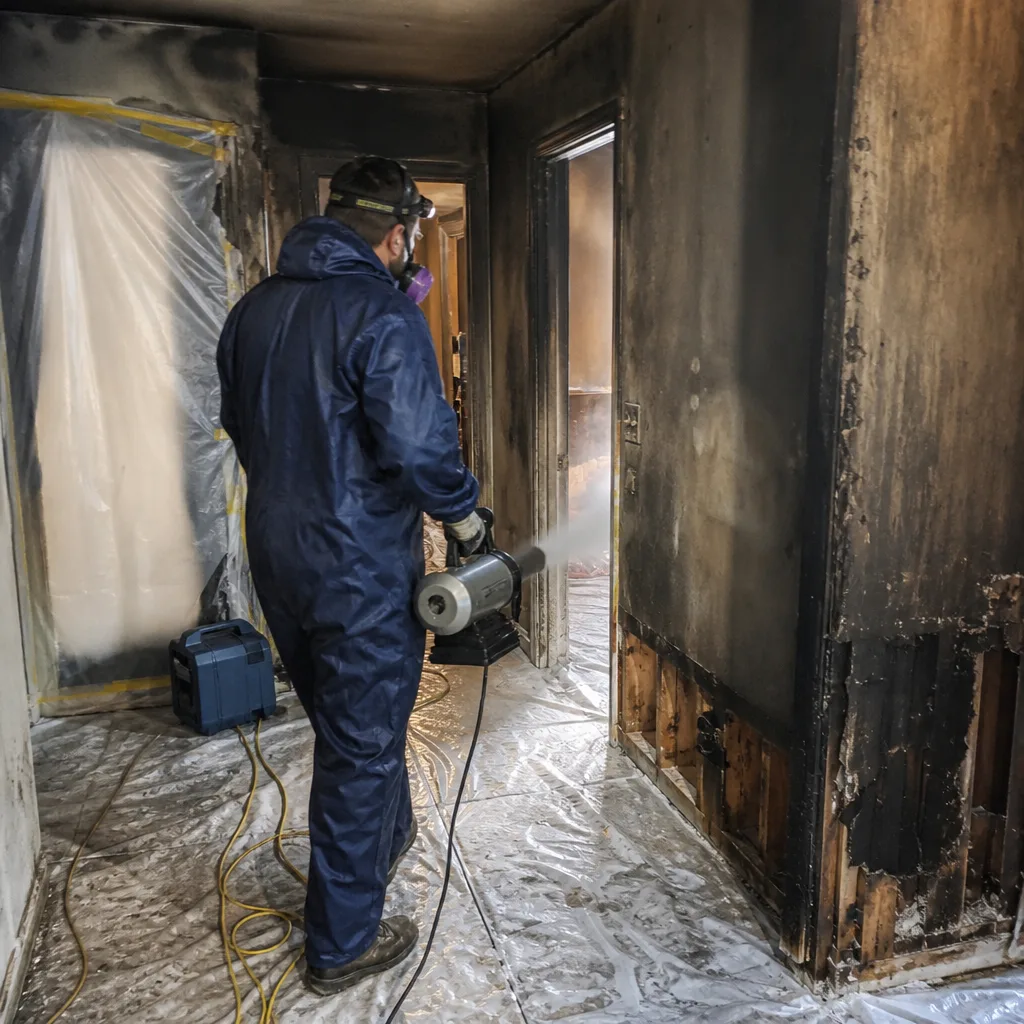
Structural Drying & Dehumidification
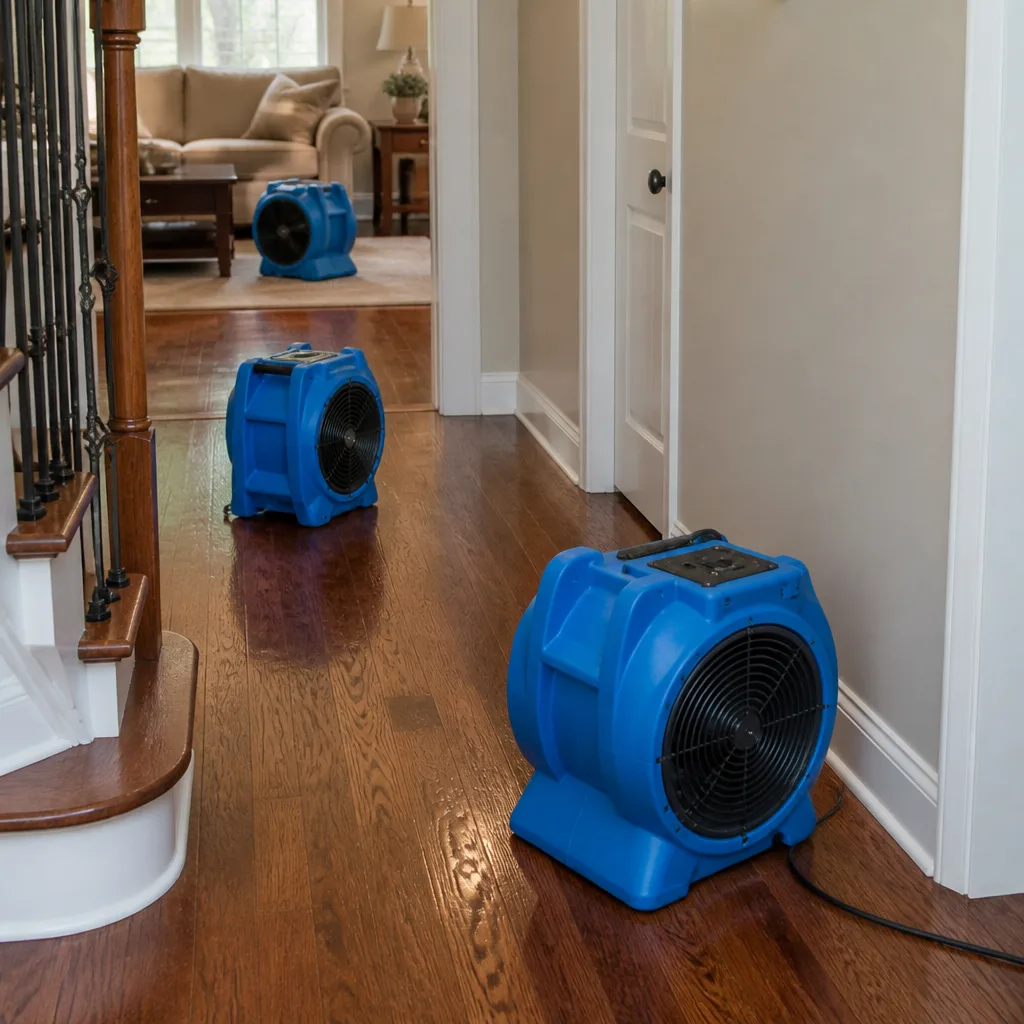
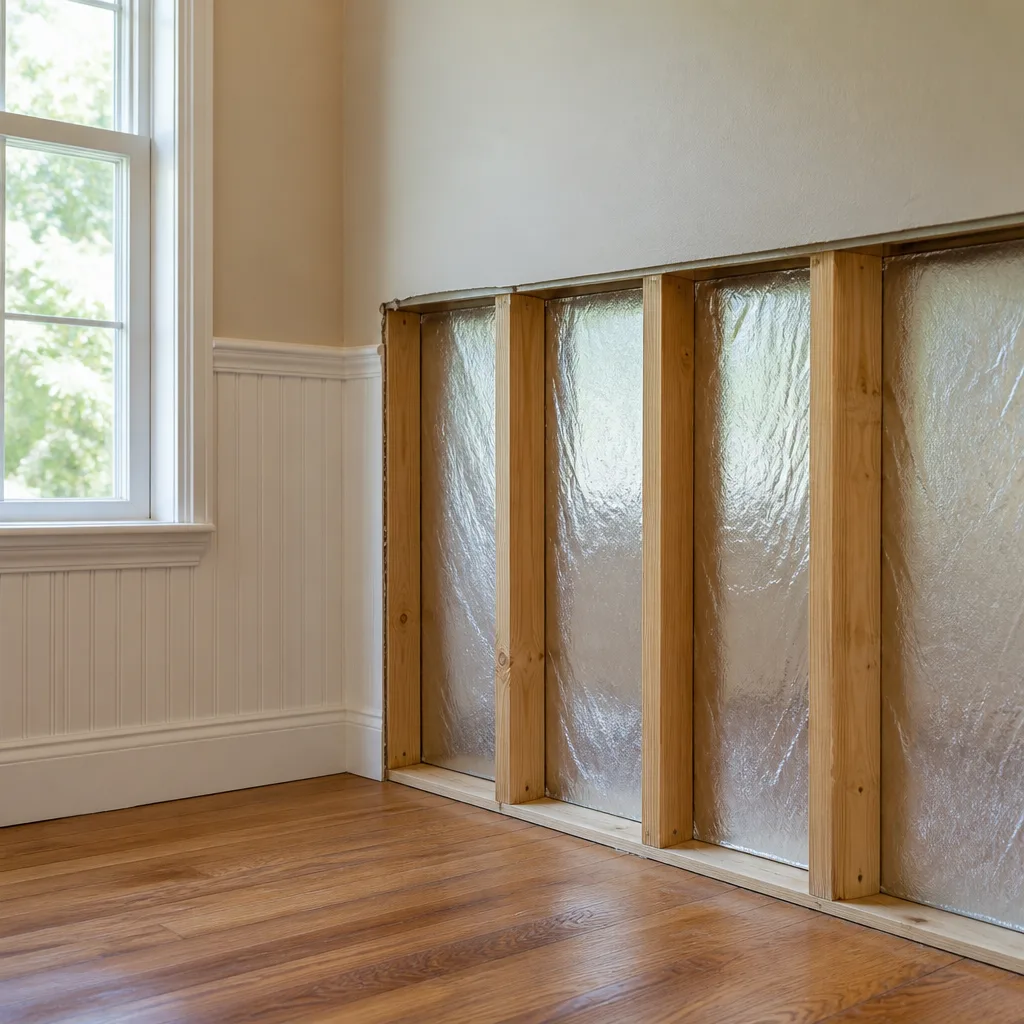
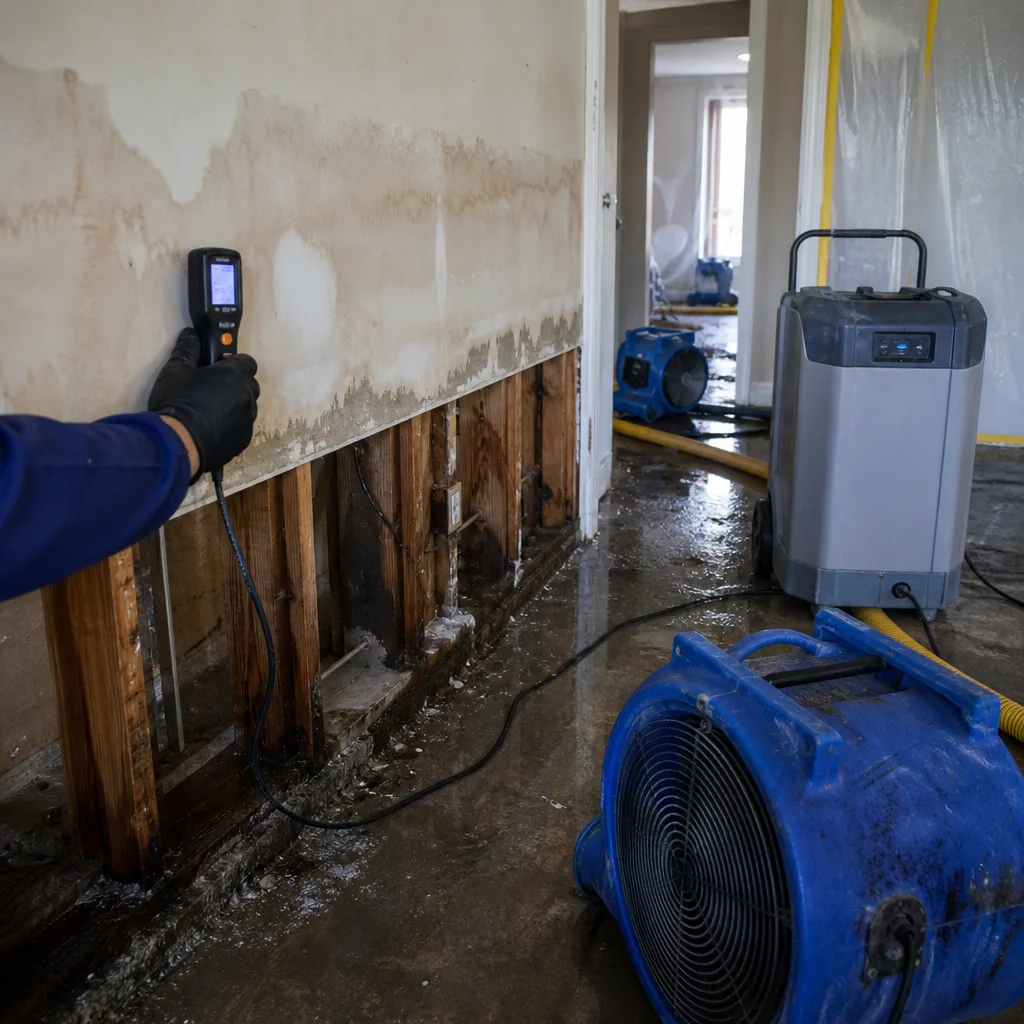
This is where SeaTac’s housing stock demands specialized expertise. The Port of Seattle Noise Insulation Program added vapor barriers and sealed insulation to thousands of homes near the runway corridors, creating airtight envelopes that standard drying approaches fail to penetrate. We use Injectidry cavity drying panels, Dri-Eaz and Phoenix dehumidification systems, and XPOWER air movers to establish vapor pressure differentials that pull moisture from behind sealed assemblies. Our psychrometric data - daily temperature, relative humidity, and specific humidity readings - documents progress to IICRC, RIA, and IFA standards and produces the drying logs your insurer needs to pay the claim without a fight.
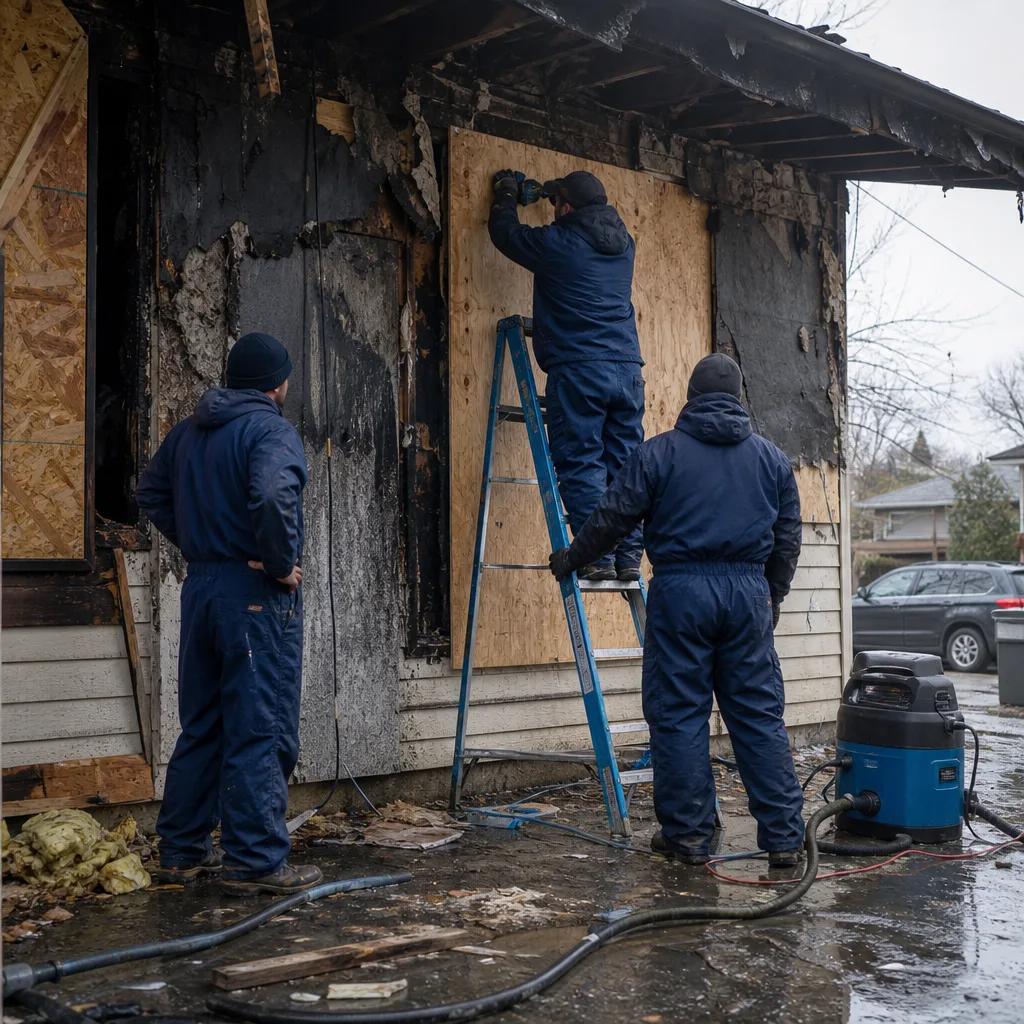
Flood Cleanup
SeaTac’s 38 inches of annual rainfall, concentrated October through April, overwhelms aging gutter systems and saturated crawl spaces in the city’s 1950s-1970s housing stock. We handle Category 1 clean water, Category 2 gray water, and Category 3 black water losses with appropriate containment, PPE, and disposal protocols. Because SeaTac’s mild winters rarely freeze, wet materials stay biologically active year-round, extending mold-risk windows and requiring longer structural drying timelines than inland Washington cities.
Burst Pipe Restoration
SeaTac’s original galvanized and early copper plumbing, now 50-70 years old, fails predictably at joints and at the transition points where noise-insulation retrofits disturbed wall assemblies. We don’t just dry the visible water. We trace the migration path through affected cavities, document affected square footage by material classification, and deliver a written scope that separates emergency drying from necessary reconstruction.
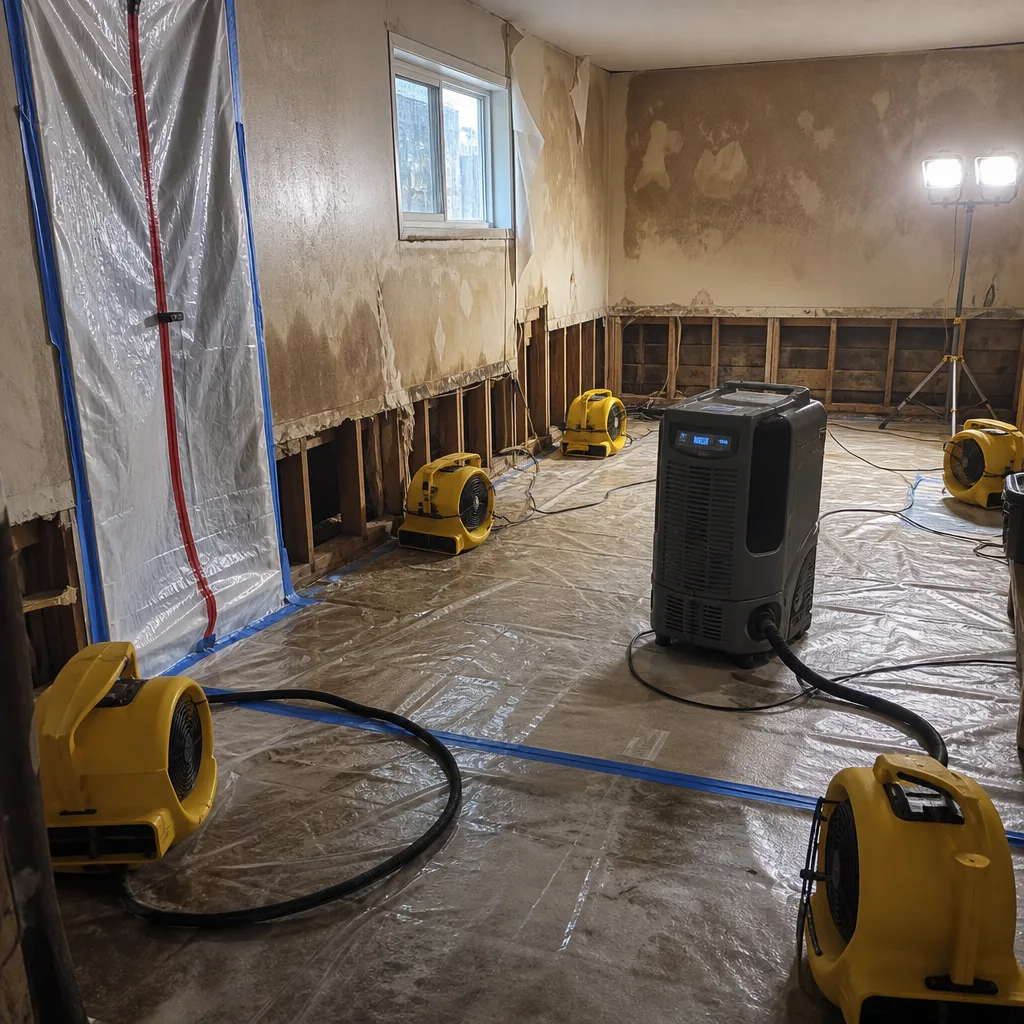
Basement Water Removal
Many SeaTac ranches have partial basements or converted crawl spaces with minimal ventilation and aging foundation drainage. Standing water in these spaces requires submersible extraction followed by targeted dehumidification to prevent secondary damage to floor joists and sill plates.
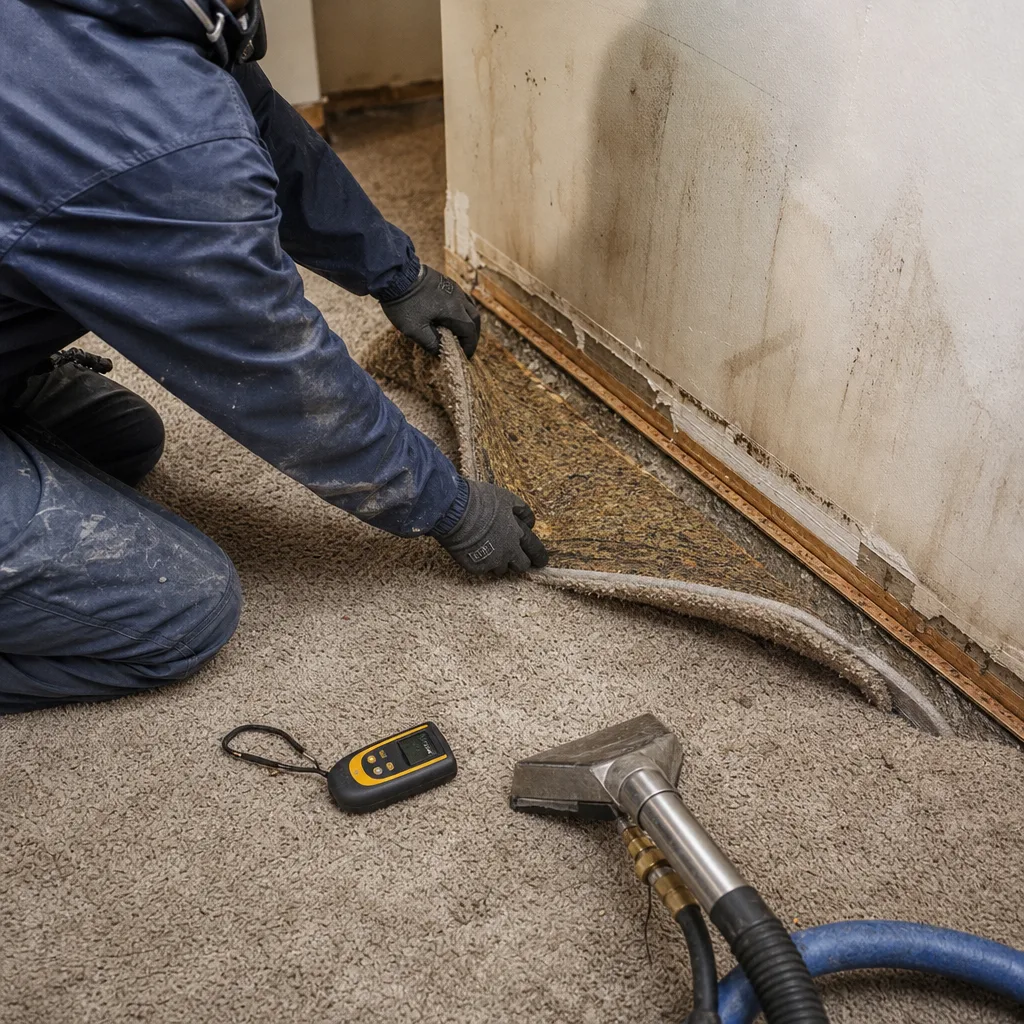
Ceiling & Roof Leak Water Damage
SeaTac’s composition roofing, often at end of service life on rental properties, fails at valleys, flashing points, and around HVAC penetrations added during NIP retrofits. A small ceiling stain in a noise-insulated home frequently masks extensive cavity saturation. We probe vapor barriers directly, use thermal imaging to identify anomalous patterns, and never close a job based on surface readings alone.
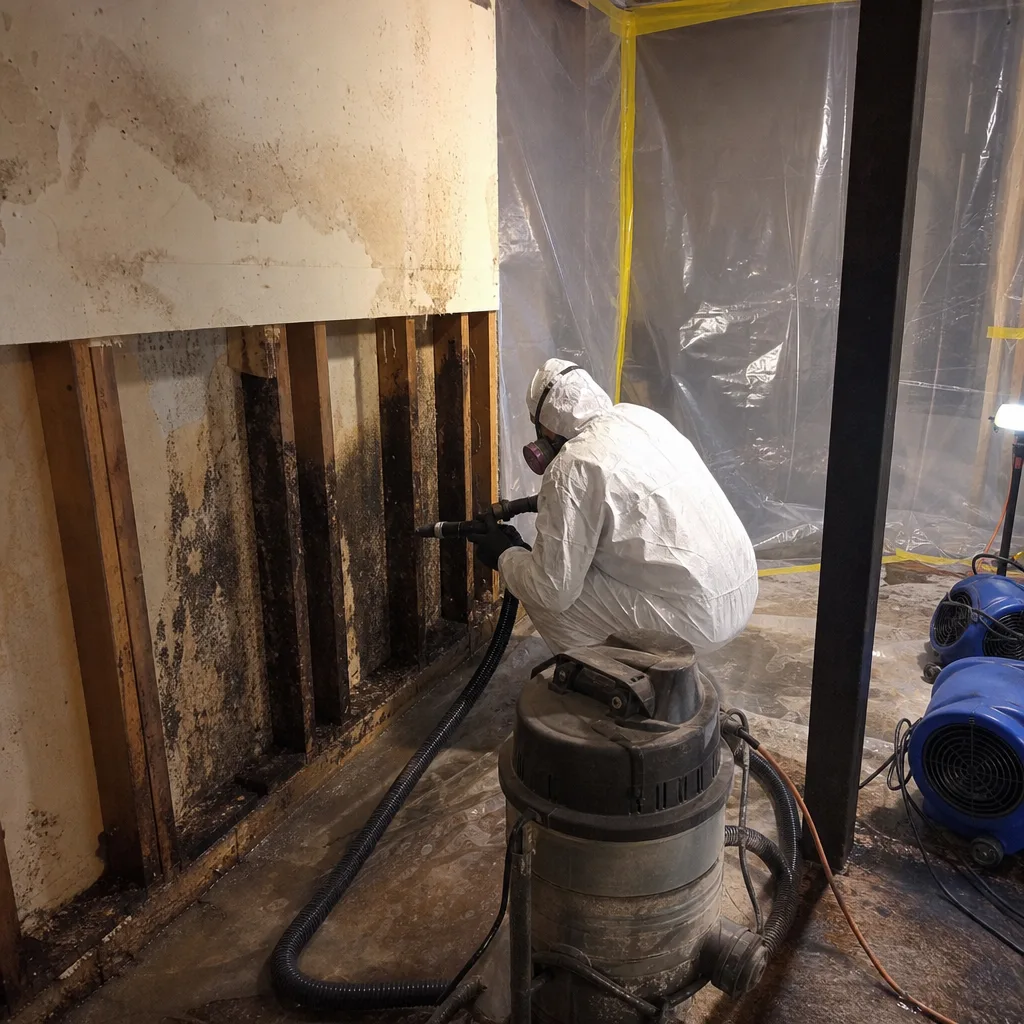
What happens when you call
- 1
A real person answersNo phone trees - you reach a local pro.
- 2
You get an upfront price rangeHonest numbers before anyone is dispatched.
- 3
A background-checked tech heads outLicensed & insured, dispatched right away.
- 4
You approve before work beginsNothing starts until you say go.
BeforeAfterTrusted Brands We Service in SeaTac
Our equipment inventory includes professional-grade drying systems from Dri-Eaz, Phoenix, and XPOWER, with Injectidry cavity drying capability for SeaTac’s NIP-retrofitted homes. We stock local replacement parts for common dehumidifier and air mover models to minimize downtime if equipment needs service mid-job. Every machine’s output is documented to IICRC, RIA, and IFA standards, producing the daily drying logs that turn restoration invoices into payable insurance claims.
Common Water Damage Restoration Problems We See in SeaTac Homes
- Hidden cavity saturation behind NIP vapor barriers. Homeowners near the runway corridors trust a cheap pin-type moisture meter on drywall and never probe the sealed vapor barrier. Wet insulation wicks for weeks, and by the time mold is visible, the job has escalated from drying to full remediation.
- Incomplete drying of sealed wall assemblies. Restorers treat every loss as a standard Pacific Northwest envelope and skip aggressive cavity drying. Wet insulation behind the noise-abatement retrofit re-wets the assembly within days, and the homeowner calls back with new stains and a smell.
- Extended mold-risk windows due to mild winters. Because SeaTac’s temperatures rarely drop below freezing, wet materials stay biologically active instead of drying out naturally. Crews that run normal drying timelines for Spokane or Yakima close jobs while moisture readings are still elevated, and mold colonizes within 72-96 hours.
- Legacy plumbing failures in converted rentals. SeaTac’s large share of rental-converted 1960s ranches means deferred maintenance on original galvanized supply lines. When a pipe fails, multiple units are affected, and property managers need documented scopes for insurance and tenant displacement claims.
Pricing for Water Damage Restoration in SeaTac, WA
Emergency water extraction in SeaTac typically runs $950-$1,800 for residential jobs, with commercial airport properties starting higher due to after-hours mobilization and larger affected areas. Structural drying and dehumidification averages $1,800-$4,200 for standard residential losses, but NIP-retrofitted homes with cavity saturation often reach $3,500-$6,500 because of extended drying timelines and invasive moisture mapping requirements.
| Service | Typical Range in SeaTac |
|---|---|
| Emergency water extraction | $950 - $1,800 |
| Structural drying & dehumidification | $1,800 - $4,200 |
| Cavity drying (NIP-retrofitted homes) | $3,500 - $6,500 |
| Category 3 sewage/flood cleanup | $4,500 - $8,000+ |
| Written estimate and moisture assessment | Free |
What drives cost: affected square footage, material classification (hardwood vs. carpet vs. plaster), whether the vapor barrier must be probed or removed, and whether asbestos or lead testing is required on pre-1978 homes. Haven Standard, Clause 1: you receive a written price before any work starts, every time, with no scope-creep additions once the crew is inside. Call (425) 696-6320 for your free estimate.
We Also Serve Cities Near SeaTac
Our Water Damage Restoration crews serve homeowners and commercial properties throughout the metro area, including Bellevue, Mercer Island, Sammamish, and Redmond. Whether you’re in a downtown high-rise or a hillside ranch, we bring the same documentation-first approach: written price, photo record, drying logs, and the 365-Day Done Right Promise.
Serving SeaTac, WA - Our Local Coverage Area
We’re based in the SeaTac area and know this community well. Use the map below to see our service coverage - if you’re nearby, we can almost certainly help.
FAQs - Water Damage Restoration in SeaTac
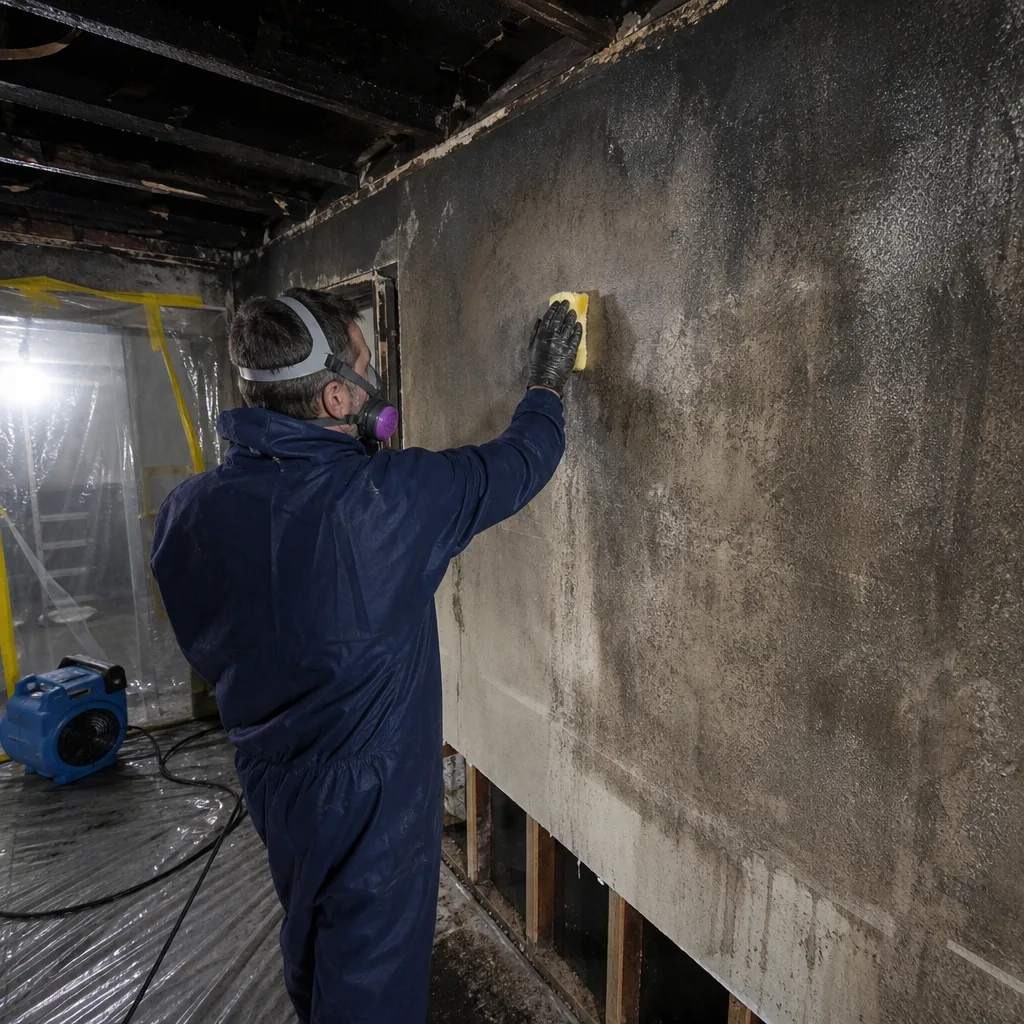
The NIP added vapor barriers and sealed insulation that trap moisture in wall cavities, so a surface moisture meter reads normal while the cavity behind it stays wet for weeks. Standard Pacific Northwest drying protocols skip cavity access, but NIP homes require probing, thermal imaging verification, and often Injectidry panel drying to achieve true dryness. Call (425) 696-6320 and we’ll assess whether your home has NIP retrofits and what that means for your drying timeline.
Mold colonization begins in 48-72 hours in SeaTac’s mild climate, where winter temperatures rarely freeze moisture out of wet materials. NIP-retrofitted homes are especially vulnerable because the sealed envelope maintains humidity in the optimal mold-growth range longer than standard construction. We document pre-existing conditions with photos on every visit to protect both tenant and landlord in insurance claims.
Category 1 is clean water from a supply line; Category 2 is gray water with chemical or biological contamination, like dishwasher discharge or sump pump failures; Category 3 is black water from sewage, flooding, or standing water that has picked up contaminants from soil or waste. In SeaTac, we see Category 2 escalate quickly in NIP homes because wet insulation harbors bacteria, and we see Category 3 in crawl-space flooding where foundation drainage has failed. Each category requires different PPE, containment, disposal, and documentation protocols.
Yes. Our Seattle office maintains live dispatch 24 hours a day, 7 days a week with no voicemail trees, and we prioritize commercial properties near SeaTac Airport where revenue depends on rapid restoration. We understand the operational constraints of hotel corridors, restaurant kitchens, and cargo facilities, and we work with your facilities team to minimize guest and tenant disruption. Call (425) 696-6320 for immediate dispatch.
Two reasons: the roofing is often at end of service life, so the leak point is rarely isolated, and the original plumbing fails at the same time due to corrosion at joints disturbed by decades of vibration and NIP retrofit work. We were called to a 1968 ranch on South 176th Street after a homeowner spotted a small ceiling stain. Our techs ran thermal imaging and moisture mapping and found normal readings, but once we probed behind the NIP vapor barrier in the wall cavity, the insulation was saturated from a legacy roof flashing failure - a Category 2 job that had been wicking for weeks. We set up containment, Injectidry cavity drying panels, and Dri-Eaz dehumidification with air movers, and the drying logs cleared the assembly in four days.
That job illustrates why we don’t trust surface readings in SeaTac’s NIP homes, and why our written scopes include cavity-probing protocol as standard, not an upsell.
Written by Alicia Brennan, Owner at Back to Dry Restoration, serving SeaTac and the greater Puget Sound region since 2011.